Pancho Martínez Pey: «Tango leaves you naked: you see people dance, and you see who they are.»

A dancer, tango dance teacher, milonguero, choreographer, tango singer, and actor, Pancho Martínez Pey is now a member of the International Dance Council (CID – UNESCO), after a career of almost 40 years in dance, which began with folk dance. With teachers like Héctor Falcón and Susana Rojo, Rodolfo Dinzel, and Petaca – among many other milongueros’ masters – Pancho has never ceased to be among the leading figures of tango since his debut in Gloria & Eduardo Arquimbau’s show. His starring role in «Tanguera, el Musical» stands out, as well as his participation in Nacha Guevara’s musical, » Tita: una vida en tiempo de tango.» He has worked in the most famous tango houses, from the legendary Caño 14 to Rojo Tango. He has also been a judge at the Tango World Championship from its early days. He has appeared in several films, including “Un tango más” (“Our Last Tango”), the documentary about the lives of María Nieves Rego and Juan Carlos Copes. And, for over 20 years, he has been the dance partner of the great María Nieves Rego. In this interview, Pancho not only shares his story but also reflects deeply on the current state of tango practice, both in social and stage contexts.

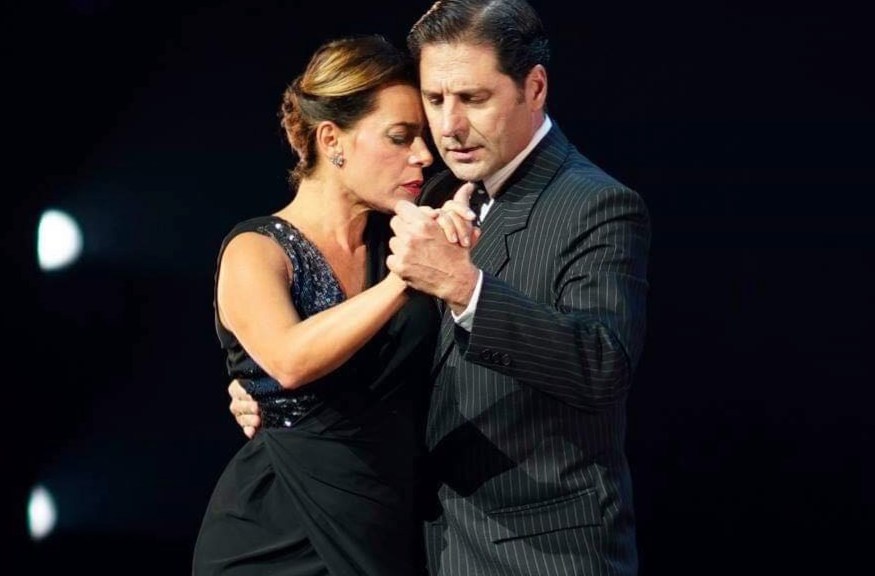
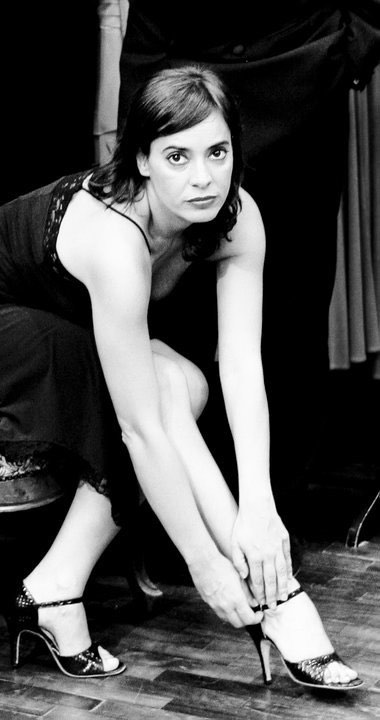
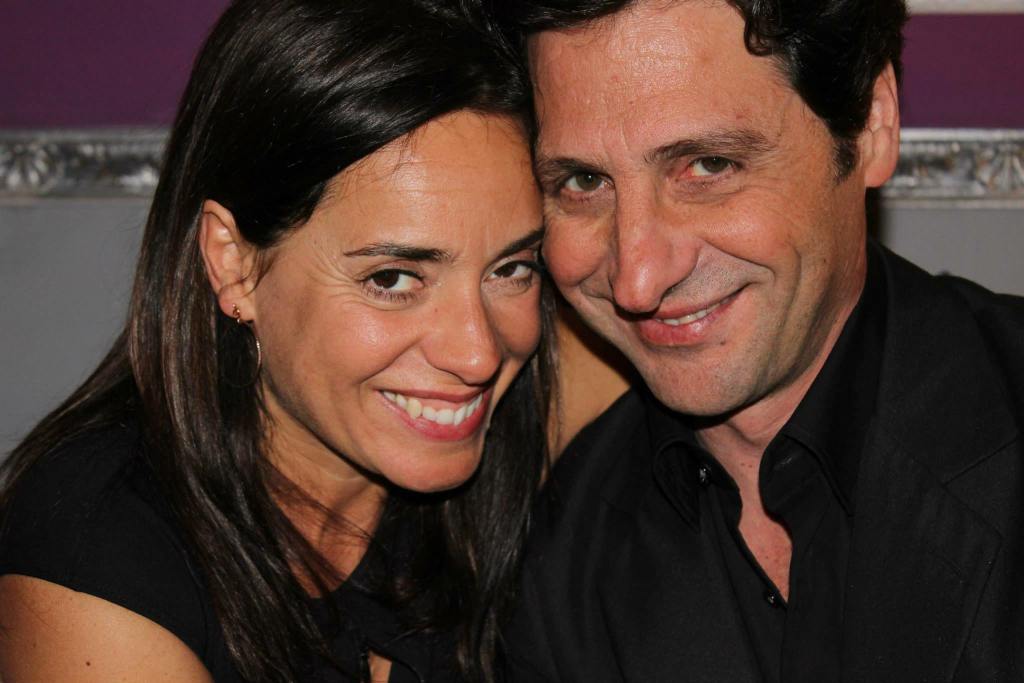
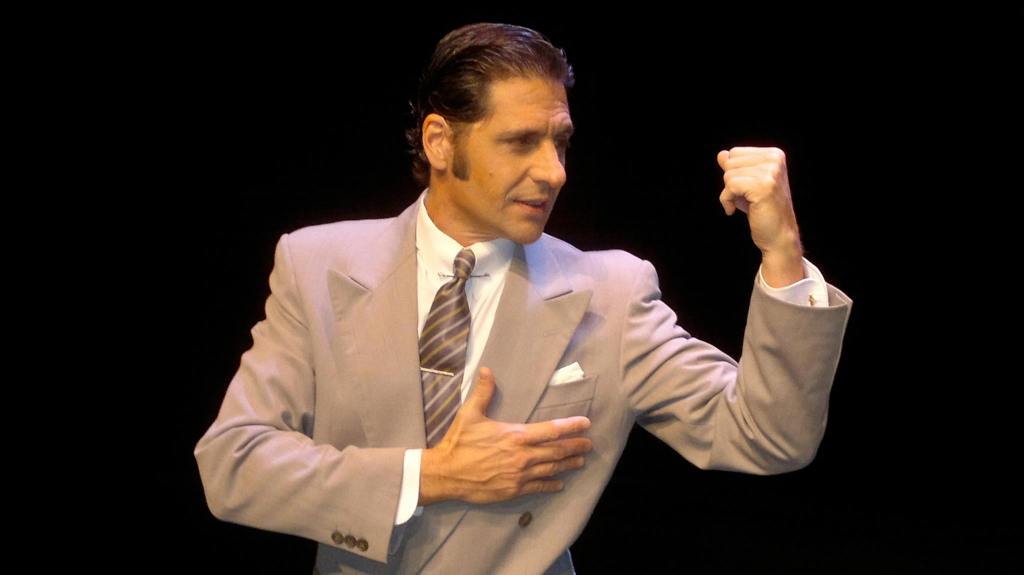
Ph. cover: terrygalindo

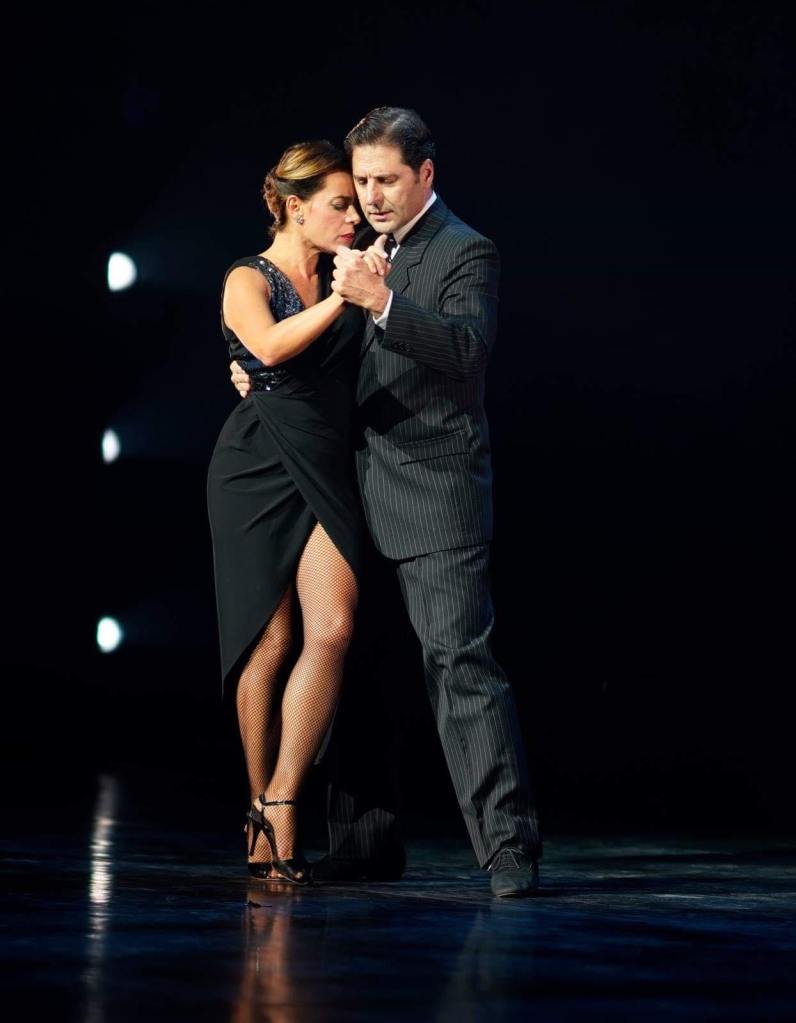
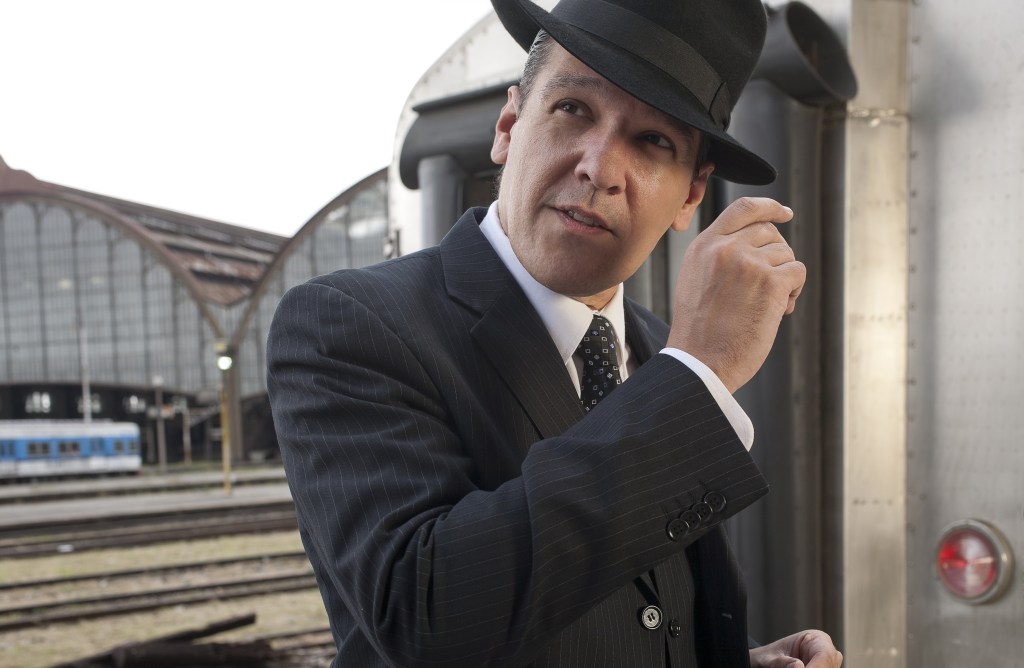
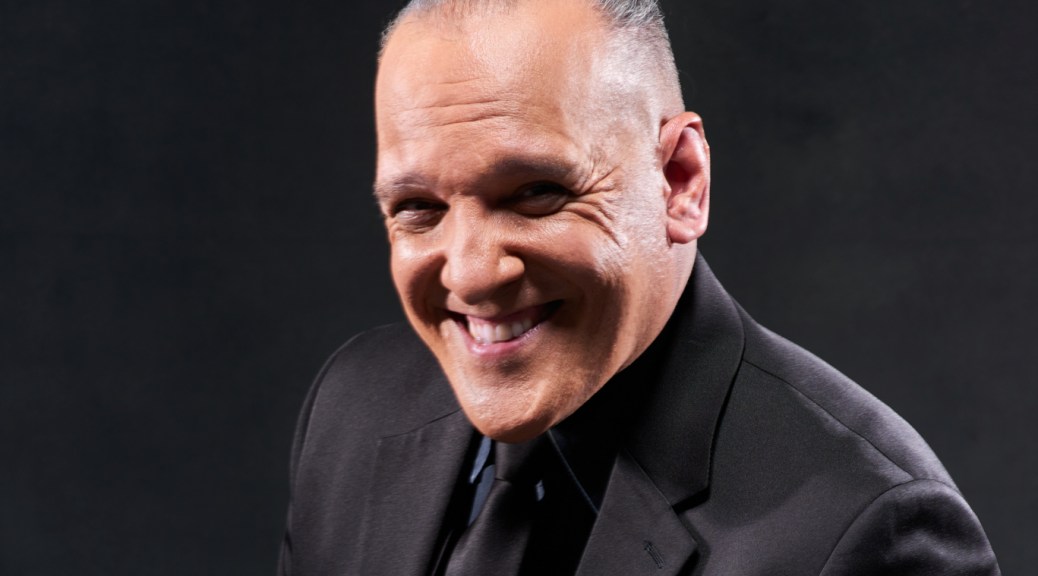
Pancho Martínez Pey. Ph.: terrygalindo

Pancho, you come from a family of musicians deeply rooted in Argentine folk music. What did the experiences lived at home awaken in you? Ord did you simply go with the flow?

It was what we lived at home because my dad and my uncle were musicians who had been playing together since they were 18. My dad was an excellent guitarist, an arranger, and a composer; in fact, he composed the music for a couple of renowned folk dances. Besides the guitar, he played very well the double bass and the requinto, which is the small guitar for boleros. Every weekend at home, there was a family gathering, and it was all about playing and dancing. Before I was 8 years old, I was already dancing with my mom at “peñas” (folk music gatherings). On April 2, 1982, my dad made his debut with the folk group, the day the Falkland Islands were recovered, and I remember being a part of it and dancing with my mom.

Was your mom a professional dancer too, or did she dance informally?

No, she wasn’t a professional dancer, although she wanted to be one, but there were many constraints back in those days: “…that she couldn’t”, “…that they wouldn’t let her”… many reasons. My old lady loved dancing Argentine folk music, and when Young, she had also done Spanish dances. One day she met my dad, and here I am.

Do you play any instruments as well?

I started as a percussionist. In folk music, I played the “bombo” (a large Argentine drum), and in the ballet, we did “malambo” (A traditional Argentine dance that is often characterized by fast footwork and rhythmic stomping. It’s typically performed by male dancers and is an important part of Argentine folk), “boleadoras” (Traditional Argentine weapons used by indigineous people for hunting, consisting of two or more balls connected by cords or thongs. In malambo, dancers swing the boleadoras in circular or crisscrossing motions to create a rhythmic and visually impressive effect), “bombo”, all percussion.

Which ballet was that?

It was the Argentine Ballet Zupay, directed by Juan Cáceres, «Zupay,» and Elba Maceira, who have been in Tenerife for several years now. I joined the ballet when I was 12 years old. Before that, I used to attend peñas and took some Argentine folk-dance classes. At the same time, I also started with the ballet at the National School of Dance, which was called «Tiempo de Folclore.» But I used to go to every peña, just as now I’m a “milonguero” -because a milonguero is someone who goes to the milonga every night, and goes to every milonga to dance.

You were a “peñero(a regular at “peñas” paraphrasing “milonguero”).

I was a “peñero”. I used to go with my dad and my uncle. We would carry the equipment, dance all night until the gathering was over, and then head back home. That’s how I spent my weeks. You can’t imagine how it was the first time I bought my own boots! I was “zapateando” (Argentine folk tap dancing) all day.
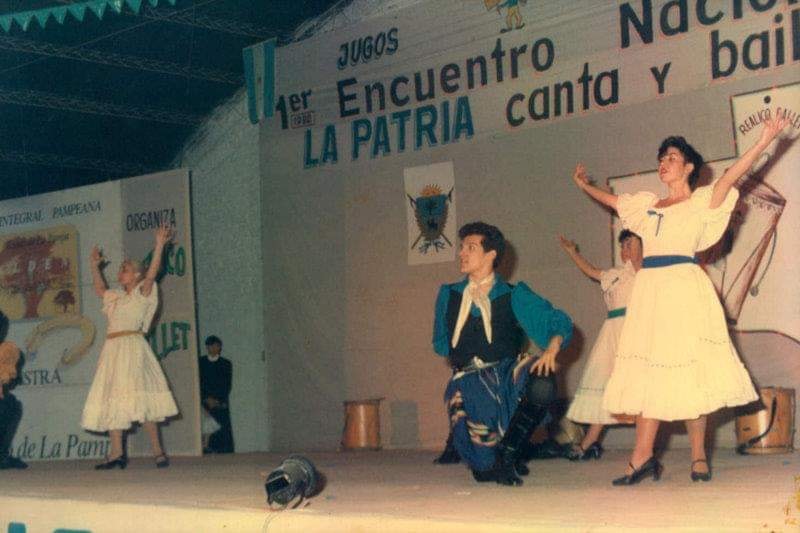
Pancho Martínez Pey dancing within the Argentine Ballet Zupay.

And in your early performances with the ballet, did you already feel something being in front of the audience, or was it just the pleasure of dancing?

It was the pleasure of dancing. I always loved to dance. In a way, people saw that spark or that something special in me; those who knew me as a child spoke highly of me, but I didn’t feel it. I was a kid, and all I wanted to do was dance.

How did you transition from folk music to tango? How did you get into tango?

We started doing tango choreographies in the ballet. My first tango teachers were Héctor Falcón and Susana Rojo.

Oh, what a game plan! What did you feel the first time you saw them dance?

I loved them; they were fantastic. Their presence, their style. They would embrace each other, dance, and it was like, «Wow!» They left you astonished.

So, that’s where you began your tango journey?

That’s where I started, choreographically. Then in ’92, a guy who had been part of my dad’s folk music group and had found work in the Verbenas circuit in Spain called me. I was working at a bank in credit cards and had just taken some classes with Copes. I said yes and left everything behind. I spent a year and a half traveling all over Spain. We played a bit of everything to make people dance. I played the drums, sang, and during breaks, the keyboardist and I would dance tango and Argentine folk music for the audience while my friend sang with his guitar. And I would end with a malambo.

And… what happened?

It happened that the audience went wild. They loved it! I’ll never forget, a town called Toreno, located up North of Spain, in the way to Galicia. We were in the square – which was huge – along with a wind orchestra, and there must have been about three thousand people. It was crazy! When we played, got down, and danced, the audience went crazy.

And what did you hook from that journey for your personal story?

I went with a lot of enthusiasm, like any young guy: “I’m going abroad, I can make money… When I come back, I’ll open a bar, a karaoke place, with a stage for shows and a dance floor with live musicians…” and so on. And I came back with less money than when I left! (Laughs).

Though, you gained in satisfaction, even if the money didn’t follow.

Exactly. That trip left a mark on me, it made me grow a lot as a person. Maybe, if I had stayed here, I wouldn’t have seen what I saw when I was abroad, about myself, my relationship with my family, and many other things. Also, about what I truly wanted. I’ll never forget it; I was very sad because, at the time, everything was more difficult. They sent me VHS tapes! My friends sent me cassettes and said, “What are you doing there? Why did you leave? Come back.” I was really down. We all were kind of sad. And one day, as we were returning from a performance…

Do you remember why you were feeling down?

It was because of the nostalgia… We missed social codes… friends calling you to meet for coffee in two seconds, laughing about the same things…

What nourishes you.

What nourishes you. Having to explain to a Spaniard how we thought something, so that they can have fun with us. And because I was still quite Young, mentally, that trip helped to mature my mindset.
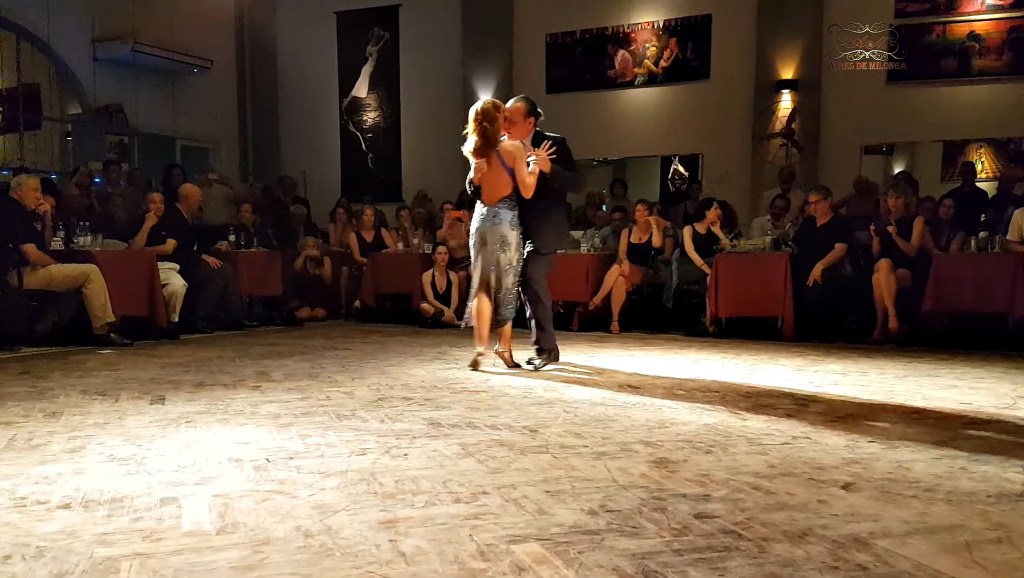
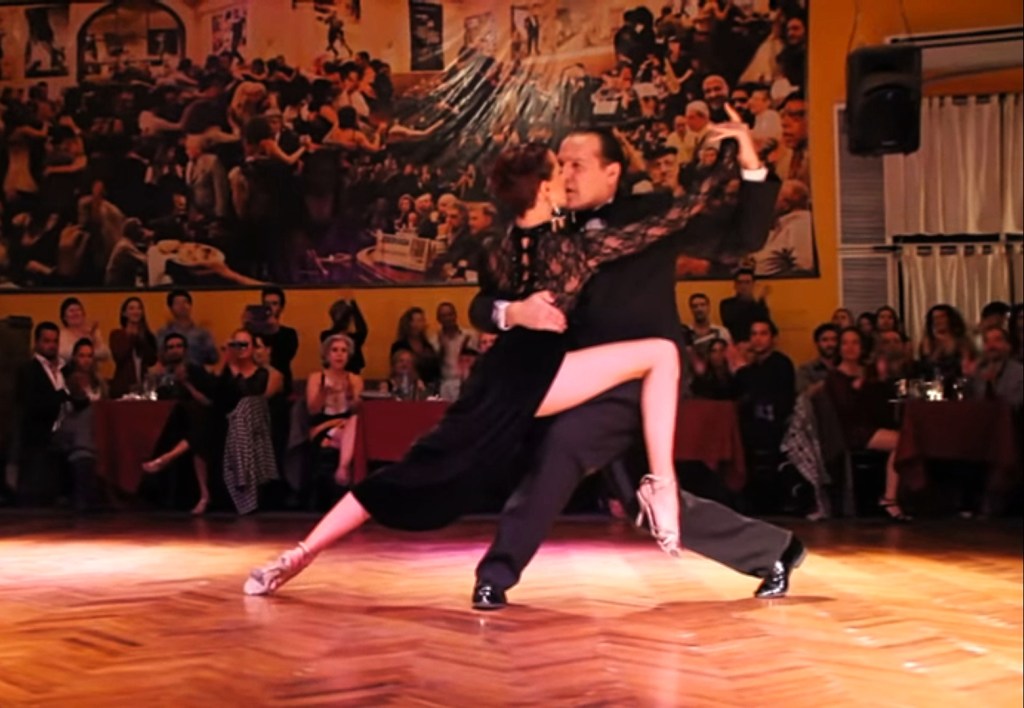
Pancho Martínez Pey with Lorena Ermocida in Salón Canning

So, what happened next? You were coming back from the performance and…?

There was a radio program hosted by Alberto Cortés that we used to listen quite often, and on that day, he closed by talking about these things: nostalgia, and so on. And he ended with a tango. The three of us were in the truck’s cabin, traveling, and you know when you feel a void, like there’s no air, nothing, and you only hear that song? I felt it as if the glass was breaking, as if everything was starting to crack.

The movie was starting to crack, the movie screen.

Exactly. It was a very strong nostalgic moment. I feel that it was there when the tango came, touched me, and made a “ping.”

Let’s say “tango waited for you” until then (referring to a celebrated quote of Anibal Troilo: “Tango awaits you”), that’s when it reached you.

Exactly because it’s tango that looks for you; you don’t look for tango. You can listen tango music all day long, as much as you want, and not understand a thing. But when you’re ready, tango comes, touches you, and says, “Boom! You’re mine,” and it enters.

Do you remember which tango it was that it entered with?

I think it was “Volver.” I don’t want to lie; I know it was Gardel, but I can’t specifically recall whether it was “Volver” or “El día que me quieras.” But from that moment on, the only thing on my mind, was to return. And I came back home.

«…it’s tango that looks for you; you don’t look for tango. You can listen tango music all day long, as much as you want, and not understand a thing. But when you’re ready, tango comes, touches you, and says, “Boom! You’re mine,” and it enters.»

Do you remember which tango it was that it entered with?

I think it was “Volver.” I don’t want to lie; I know it was Gardel, but I can’t specifically recall whether it was “Volver” or “El día que me quieras.” But from that moment on, the only thing on my mind, was to return. And I came back home.

Did you return with the idea that you wanted to continue with something related to what you had experienced?

I came back with the clear idea of becoming a tango artist, so I arrived with a specific goal. Additionally, when I returned, most of my fellow dancers were way ahead, and I had only retained the choreographic knowledge I had, so I was desperate. People recommended me that I take classes with different people, so I started taking classes with Celia Blanco and with Dinzel. And also, since I had taken classes with Pepito Avellaneda before leaving, and thanks to that, I started to get to know many milongueros like Rodolfo Cieri and others; when I returned, I was specifically looking for all of that. I got hooked on Dinzel and spent a year and a half in his studio while also going out to dance.

Where did you go to dance?

The first place I went to dance was the “Cochabamba” practice, where Mingo (Pugliese) gave lessons, and Gustavo Naveira organised the practice and also taught there. During that time, everyone used to go there to dance: Fabián Salas, Pablo Verón as well. I also started going to dance at milongas: Akarense, Almagro… When I went to Almagro, it was… a flash. It was a flash.»

Why was it a flash?

Because I thought I could dance, but I learned the true of tango at the dance floor of Almagro. It was the first time I entered a place and saw that human tide moving all together at once, in unison.

That famous human tide that is no longer seen, being very chaotic now the dance floor.

Now, there are all whirlpools. And the Almagro dance floor wasn’t large; it was like the Canning dance floor, for instance, but it had a tremendous circulation.

And how did that change your perception of your own dancing? Why do you say, “I thought I could dance until I entered Almagro”?

Because I realized that I didn’t know how to walk.

Are you referring to moving fluidly in the round along with the crowd or to stepping correctly?

Walking, just walking because when I attended Dinzel’s classes, they were held in a room, and we did everything in place. Everything was very intricate and technically excellent, and you learned a lot about body control. But it had nothing to do with making a displaced figure or walking four meters. So I started going to Almagro to observe. I would sit at a table and watch. I was embarrassed to go out and dance because every time I did, I bumped into everyone.

«Tango leaves you naked. You see people dance, and you see who they are: You see the one who communicates, the one who is cold, the one who is distant, the one who doesn’t allow themselves to be affected, the one who seems dying while dancing a tango. It leaves you naked.»

Plus, who knows if they would accept your invitation to dance!

Exactly. Although I was fortunate in that sense from the beginning, since I had an acceptable and generous dance. People always acknowledged me that dancing with me was enjoyable.

“Generous,” do you know why?

In a way I think it’s a matter of adaptability, I adapt well to the other person’s body. And, at the same time, even though I hadn’t yet defined my style or anything, I think it had to do with the fact that I had a dance technically developed. And it always helped me that I never had a fixed partner.

You had to particularly develop the talent of being able to adapt.

Because there were few tango venues and few dancers, and most of them came from folk dance, so most were choreographic dancers. There weren’t really dancers that you could say, “I see you dancing at the milonga.” Few truly knew both. I was fortunate to start with the milonga and the stage simultaneously.

Where do you think that ability to adapt comes from, even back then, despite the fact that, of course, you’ve kept on working on it?

I believe it’s mainly due to the love and eagerness I had for doing things, right? It’s also a natural trait I have, which is why people calls me Pancho. I’m called Pancho precisely for being Pancho (In Spanish, the adjective «pancho» is often used to describe someone who is relaxed and easygoing). I had struggled to be called by my name… but Pancho always won.

So, is it nice to dance with you because you make your partner feel calm, supported… as if you transmit your natural tranquillity to her?

I’m not sure why… Maybe because I enjoy having a good time, always. I do what I love, what I enjoy, and by doing so, I am happy, and that happiness, that positive energy, radiates.
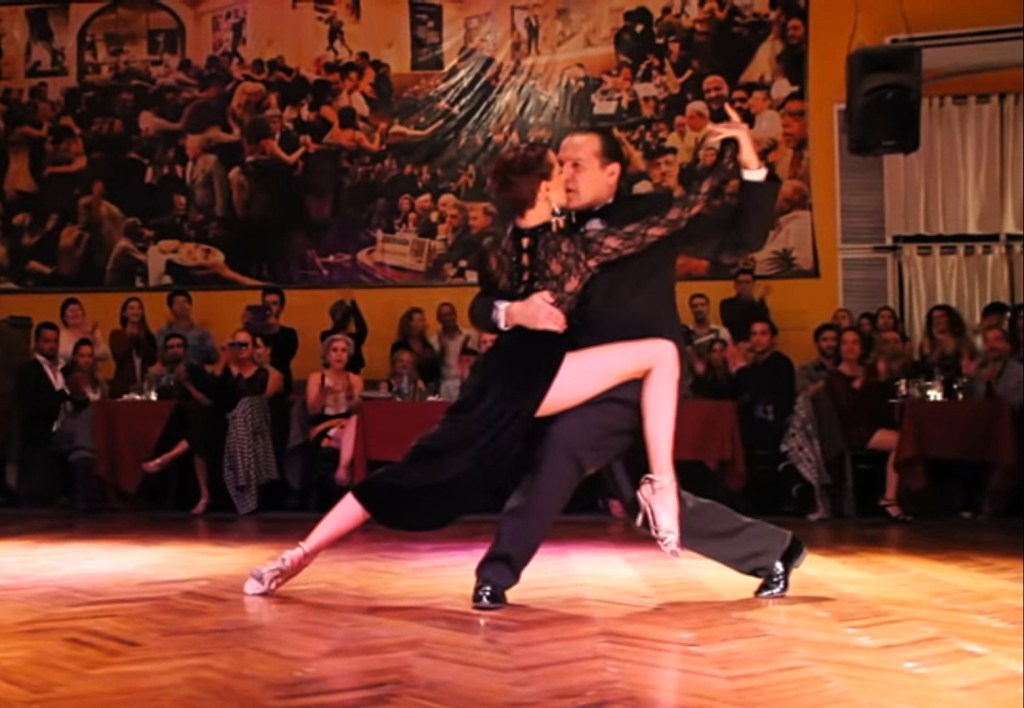
Pancho Martínez Pey with Alejandra Gutty in Salón Canning.

Where did you start? Both on stage and in the milongas.

In ’97, I was dancing in Michelangelo with Gloria and Eduardo, and I was teaching in Almagro with Dolores De Amo. We had seventy students every Sunday; it was a complete madness. I went there, and boom! Everything exploded, since then, I never stopped.

How did you learn to walk by sitting in the milonga and watching?

Watching also teaches you if you know how to watch. I watched how people walked, how they moved and circulated together. Besides, I started to meet all the milongueros – Pedro Monteleone, El Alemancito, Portalea, Poroto, El Gordo David, El Tano Nicola, Carlitos Moyano, a lot of people… Petaca!, who was my great teacher – and they would chew you out.

You would be dancing in the milonga and they would come and say…

They would chew you out. They’d come and say, «What are you doing? Don’t do that.» The milongueros were watching you all the time, they didn’t miss a thing. Petaca came every Sunday to see how I was teaching the class and used to say, «You have to tell people the truth, don’t lie to them with a step you don’t know how to do. Show people how you dance and teach them what you dance. Don’t listen to ‘la gilada’(fools, numbskulls, from the Argentine slang “lunfardo”, refering a group of people who behave senselessly), he said. And that’s how I got started; these things also shape you, you see?

Shouldn’t your generation take over the role of caring for the milonga? Because now many of those milongueros are gone. Besides, it’s another era; perhaps people wouldn’t listen to them now. But they might listen to you as maestros.

Look, in my opinion, it happened a black hole in tango due to the 2001 crisis (Argentine crisis of 2001, which involved a hyperinflationary spiral and the abandonment of the peso’s peg to the US dollar, known as the convertibility plan, resulting in a sharp devaluation of the Argentine peso, a freeze of bank deposits, and a significant increase in poverty and unemployment.). In 2001, the maestro who danced left, the assistant to the maestro left, the best dancer in the class left, and the one who didn’t dance well but was a bit clever left. Almost no one stayed here. Most of the milongueros who could leave also left. Only beginners stayed and a few teachers. And most people didn’t leave for the love of tango and to expand our culture… they went away to make money. So, as they went to make money “gancho” (leg hook) courses, “barridas” courses (sweeping), “sacadas” courses, and courses of this or that began to appear, but nobody taught how to circulate or walk, or tango with a social sense. There were few who did. I would almost say that the only one who was breaking apart with that – I remember it because I know him – was Pedro Monteleone, who went to Italy and tried to carry that line, to some extent. Apart from him, most of those who went abroad went to make money.

«…if we all did things to get better and not just trying to scrape by, everyone would be much better off. …We all need to make money, but we can make money teaching well.»

But everyone, in one way or another, comes back at some point. And some are here, like you.

Yes, today there are many people doing that. But we are also very careful about how we say it. Milongueros didn’t have much tact. «See the step, kid?» «Yes, but can you teach it to me?» He would show it to you and say, «There it is, did you see it? Do it.» And you had to figure it out as best as you could. Nowadays, you have YouTube, a teacher explaining how you should move your metacarpal muscle to reach the psoas for the axis and get to the brain to have positive thoughts about your dance partner, you know? Eighty million crap things have been added to the tango merchandising. Tango has turned into merchandising, and with the appearance of the World Championship, the interest in selling tango increased even more, leading to this thing that there must be an exhibition, an orchestra, or something in every milonga to attract people. Back in those days, people went to dance. When restrictions were lifted after the pandemic, it was amazing. Since there were no tourists, those who danced went to the milonga to dance! That was great; it reminded me of the time when I was going to Almagro. People went there to dance just for the sake of dancing; there was no one to sell anything to.

«…“gancho” (leg hook) courses, “barridas” courses (sweeping), “sacadas” courses, and courses of this or that began to appear, but nobody taught how to circulate or walk, or tango with a social sense… a teacher explaining how you should move your metacarpal muscle to reach the psoas for the axis and get to the brain to have positive thoughts about your dance partner, you know? Eighty million crap things have been added to the tango merchandising. Tango has turned into merchandising…»

It didn’t last long.

It didn’t last long; the 2021 World Championship took place, and everyone came, and the nonsense started all over again, and everyone travelling abroad to make money. Fine! We all need to make money, but we can make money teaching well.

Pancho Martínez Pey as a judge in the final of the World Stage Tango Championship in 2021.

And back in those days, if I’m not mistaken, if there was any hierarchy, it was based on dancing well or not. If you didn’t dance well, nobody would dance with you, which forced you to improve your dance to be able to dance with someone. Unlike now that they dance with you -you being a maestro with a lot of tango-, and next they dance with someone who doesn’t know how to step or embrace, as if it doesn’t matter.

Clearly, but they wanted to break with that, and began to appear relaxed milongas where the “cabeceo” (nodding head) no longer existed. Either you’re sitting and talking with someone, and anyone comes to take you out to dance.

Oh, yes, and they interrupt your conversation without even flinching.

Not only do they interrupt, but the person who is being interrupted goes to dance. In other words, he or she supports the persons who came to interrupt… This is happening a lot abroad where people go to dance, and to dance, and to dance aimlessly, as if they were going to the gym. And the times I’ve been abroad, and I’m invited to dance, if you say, «No, I don’t feel like dancing,» they gave you the look because they think “This guy believe he is …

…Pancho Martínez Pey!

…a star?” (laughter) No, I’m not a star, but you don’t understand what it means to go dancing. You dance when you feel like it, but you can also sit down and enjoy the night talking with your friends or listening to tango because you like it, and you’re not obliged to dance. The point is that they don’t understand the concept of choice; they confuse the lack of choice with rejection. People can’t stand not being chosen, they can’t stand it. And, on the contrary, they have to understand that cabeceo is there so you don’t feel bad. But they take it as… «Oh, he’s so cocky,» or whatever.

«The point is that they don’t understand the concept of choice; they confuse the lack of choice with rejection. People can’t stand not being chosen, they can’t stand it. And, on the contrary, they have to understand that cabeceo is there so you don’t feel bad. But they take it as… «Oh, he’s so cocky,» or whatever.»

It gets confused being democratic, with you having to hug everyone. But democracy is based on the right to choose, which implies respecting everyone’s right to say no without needing to give reasons why.

Exactly. If not, it has been imposing it on you, which is violent. When I went to Almagro, there was a girl who I always liked watching dance, and I wanted to dance with her, but she didn’t look at me, and she didn’t look at me, and she didn’t look at me until I couldn’t take it anymore. I got up, went to her table, and said, «Do you want to dance?» She gave me the look and said, «Well, now that you’ve come over here, I guess I’ll have to go.» She got up quite upset, and we went to dance. Then she softened up; she liked how I danced, we started talking, and over time, we became friends. But I’ll never forget that first time. I never went to a table to ask a girl to dance again, never.

The same thing happened to me when I had the habit of pulling with my arm before moving, and Natalia Games cured me of that. We were in a class at Canning, and I said, “Can I lead you?” She replied, “Sure,” and as soon as I grabbed her and did this, she yelled, «What are you doing?!» I got scared as if I were hurting her, but I never pulled anyone again, you see?

And, on the other hand, once I was at La Viruta on one of those nights when I didn’t feel like dancing and avoided all the glances. There was a dancer – with whom I’ve danced professionally, and we’re great friends – who kept looking at me and looking at me until she couldn’t take it anymore. She turned and said to me, “When are you going to invite me to dance?” I replied, “I’m sorry, but not today. Some other time, when our eyes meet, and we both agree, we’ll go dance.” I think it was the next weekend or the next time I went to La Viruta, but these situations, which are funny deep down, are necessary. Those codes added quality to tango. Nowadays, all of that is not valued, and quality is lost.

The truth is that we women have always had the chance to ask someone to dance using cabeceo, without needing to go to the table like they do now

Always. Women have the power. They’ve always had it; all the milongueras will tell you that. They wouldn’t accept a guy if they hadn’t seen him dance first, and he had to dance well. Nowadays, women go out to dance just to avoid “planchar” (It refers sitting out for an extended period without dancing neither engaging socially in the milonga).

Just to move.

Just to go to the gym. And going out to dance with someone you wouldn’t choose just because you didn’t want to miss dancing that tango is very selfish. The primary thing about this whole thing is the encounter with another person to enjoy tango or the “tanda” you want to dance. If you’re okay with dancing with anyone that means that your frankly don’t give a damn who you dance with, you don’t care neither how he or she moves, nor how they feel. For that, you could dance with a pillar, and would just work. I insist, that’s very selfish.

«This is happening a lot abroad where people go to dance, and to dance, and to dance aimlessly, as if they were going to the gym.»

Returning to your professional trajectory, how was that experience with Arquimbau?

Fantastic. Think about it, I went from the folk ballet to dancing with Gloria and Eduardo! I mean, I entered at the top, and they fully accepted me. They were wonderful, really. And Eduardo, a genius, a maestro, not just in dance, but in life, in the milonguera life, in what tango is. Tango is you.

What does «Tango is you» mean?

Tango is you and how you relate to people, how you experience it, how you express yourself. Tango leaves you naked. You see people dance, and you see who they are: You see the one who communicates, the one who is cold, the one who is distant, the one who doesn’t allow themselves to be affected, the one who dies while dancing a tango. It leaves you naked.

How did Arquimbau manage to get you to bring that to the stage?

Because Eduardo is history. It’s the same as with María or Copes. You learned history when they talk about how they used to go to dance in the “corralones” (corrals) of Mataderos, or all those things we never experienced, just saw in photos but don’t understand. And when they tell you all those stories, you began to understand, in a way, the beginning of things and what was happening. So, you watch «Sucesos Argentinos» (The first Argentine cinematic newsreel, at a time when television did not yet exist in the country, shown at the beginning of cinema sessions) and you flash back to what they told you about when they were young and went to the neighbourhood club, and the orchestras played, and there were five hundred people dancing on the dance floor, and was absolutely crazy. All of that teaches you too.
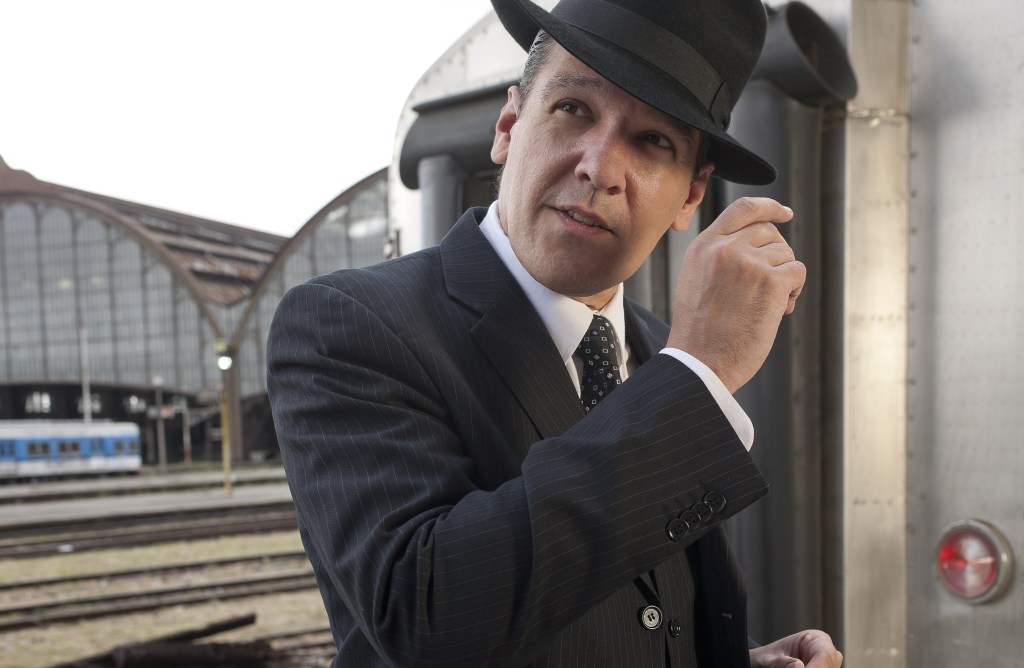
Pancho Martínez Pey Ph.: Pilar Bustelo

What were the milestones or thresholds in your career, like when you arrived in Almagro and said, «I don’t know how to walk, I don’t know how to circulate»?

The first one was when I auditioned to join the Parque de la Costa ballet, around the same time I started at Michelangelo. I made it through the initial selections, but in the final round, I didn’t get in. However, by one of those twists of fate – and nothing happens by chance – Jesús Velázquez, who had been selected, got an offer for a tour in China and called me to replace him. Patricio Touceda, who had been selected with his partner, had recommended me. At that time, I was working on the trains. I started at five in the morning and finished at one in the afternoon…

Was that an administrative job?

I was a ticket seller at the Floresta train station, and within a year, I was promoted to station chief in Moreno in the morning. I went on from selling about fifty tickets on a good day to selling twelve hundred and becoming the station chief. I was in charge of a cashbox with three thousand dollars and three employees under my responsibility, plus the ones working on the little trains that went to Luján and Mercedes. It was crazy. After work, I’d go home, change, eat, and around three in the afternoon, I’d head to Dinzel’s place until ten at night. I would lock up the studio.

Seven hours of rehearsal every day! Not bad! A full workday! Actually, you worked double shift – one on the trains and another in dancing.

That’s how I spent two years of my life until I got the opportunity at Parque de la Costa.

Did you find out why you didn’t get selected in that initial audition, despite them later calling you back? Did you figure out what you needed to improve?

It was related to technical aspects of ballet. I went from dancing folklore to tango and had no idea how to do a barre exercise. I’d spin, and by the second turn, I was already starting to stumble, and the first turn was just a fluke. With time and lessons, I improved.

«There is a huge difference between dancing tango and being a dancer… Many people are very talented dancers, but they can’t be artists because they are not made for the stage. Conversely, some people are excellent artists and dance tango very well on stage, but they can’t dance in the milonga or they do it but with no reaction from the public. They are two opposite things, and it’s challenging to do both; you have to understand what is required in each place.»

What was the next threshold or challenge that made you grow artistically?

When we debuted in Tanguera, Junior, who played the lead role, cut his finger badly during the knife fight scene, and I had to step in to cover for him. That’s how I started as a cover; three months later, Junior left, and I became the lead. That was another threshold because I jumped up about twenty levels in one go. Tanguera made me evolve a lot as a dancer. Or, better put, it helped me develop my talents.
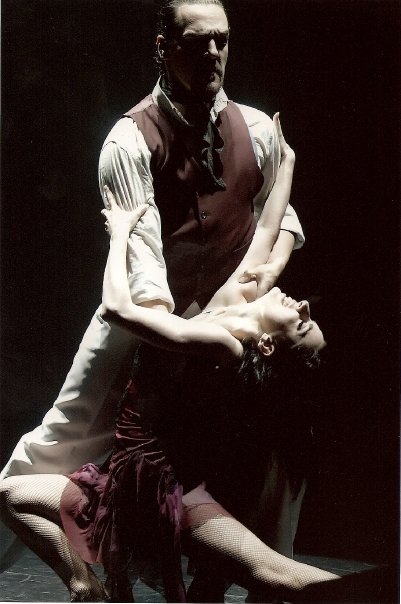
Pancho Martínez Pey and Gabriela Amalfitani in «Tanguera, el Musical».

What did that threshold demand from you?

Everything, because there is a huge difference between dancing tango and being a dancer. I became a dancer there. And Tanguera demanded a lot from me because I had the lead role and had to act, even though I didn’t have any lines, but I had to act.

Did you discover your inclination for acting there, or did you already know that you wanted to act?

I had always been a clown. At home, when we had people over on weekends or during family gatherings, I would always dress up or do a sketch, imitating my dad coming back from work. In school plays, I was always cast to act. I had secured the role of San Martín.

By the time Tanguera came around, had you already done the movie with Carlos Copello?

Yes, the first thing I did scenically was the movie I filmed with Copello, “Tango Fatal,” and that was before Tanguera. In fact, I started doing some things with a friend named Marina Vázquez. She was the one who told me, “You’re an actor.”

Pancho Martínez Pey with María Nieves Rego.

Why did she say that? Was it because of how you performed?

Because of how I performed, how I understood the directions, and how I could express myself. “Well, teach me,” I said, and we started to try out some things. But I never took any intensive acting course; we never have time, you know how our job is. The schedule is a mess, not only changing from day to day but within the same day! Afterward, I did some more studio work with Gaia Rosviar, who is also a friend, and a dancer and a singer, who was in Cabaret, and with her I did take some courses

I read that you also enjoy writing or that you studied narrative. Is it correct?

I’ve always been interested in it because I’ve always wanted to put together a script or something like that. I started writing some things, but they remained unfinished. What I have are more like scattered ideas that I managed to write down. To develop them, I’d have to talk to someone who really knows how to do it.

Because I also get tired of seeing people who… well it’s fine. Actually, I think it’s great, that everyone does things because everything contributes. The truth is that there’s more criticism than action, and we need people who do. When I worked on the production of the World Tango Championship, back in 2017, I was asked to find tango shows, and there were none! By that time, shows like Tango Pasión, Tango X2, and Forever Tango had already disappeared.

«What do you think is the reason for the decline of these types of shows or shows tours? In a way, it was because of the global economic crisis, which led to a drop in investment by production companies. Also, tango shows didn’t evolve.»

In what sense it was due to the non-evolution of tango shows?

Because there is no musical comedy: a spoken, sung, and danced story. In fact, the success of Tanguera was due to the fact that, even though it was a simple story – the bad guy, the good guy, and the girl in the middle – with the magic that Omar Pacheco brought to it, it had you captivated the whole time, like, «What the hell is happening?» More than the script, it was about how the story was told and unfolded, thanks to a good direction. We performed it in places that were not at all prepared to set up the stage, and people applauded standing.

When we did «Tita: Una vida en tiempo de tango» with Nacha (Guevara), Julio (Balmaceda), and Corina de la Rosa, that was a musical. However, in a theatre with nearly a thousand seats, we only worked at fifty percent. There wasn’t much interest in tango.

Pancho Martínez Pey with Julio Balmaceda in the backstage de
«Tita: una vida en tiempo de tango».

Dolores de Amo shared a similar view: in her interview she made the point of the need to move from the traditional tango show to one more scripted, where artists not only danced but also had to act, speak, and sing. However, she also pointed out that tango dancers lack the kind of comprehensive training that type of show requires. What’s your opinion on this?

I agree. In general, firstly tango dancers are usually self-taught, and secondly, we are never coached. Once a tango dancer learns how to dance, they start creating their choreographies and forging their own path, and they rarely take lessons anymore. Why? Mainly because work usually comes before personal growth. This is primarily due to the scarcity of job opportunities and the low pay. If someone with a steady income is barely making it, imagine a tango dancer! They either have to dance in Caminito, or spend all their nights as taxi dancers, or do something else. This it what makes your prioritize work over artistic development.

Do you miss those types of shows?

Yes, of course, because I’m a stage guy. I never stopped being an artist, even though I became a milonguero and always have been a milonguero.

But the exhibition you can do in a milonga is not the same; it doesn’t fulfill you in the same way.

No, it’s not the same; in a way, going to dance at an exhibition is simpler. Getting on stage is a whole different thing due to the preparation, rehearsals, lights, atmosphere, audience, seats… And beyond all that because it puts you in a different place as an artist: getting on a stage… it’s getting on a stage!

Many people are very talented dancers, but they can’t be artists because they are not made for the stage. Conversely, some people are excellent artists and dance tango very well on stage, but they can’t dance in the milonga or they do it but with no reaction from the public. They are two opposite things, and it’s challenging to do both; you have to understand what is required in each place. Once, Pablo Verón said, «I love all those who do fusion, but to fuse, you first have to know: you have to know what jazz is, what tango is, what folklore is.»

Sergio Cortazzo made a similar comment in his interview when he said, «Piazzolla, before revolutionizing tango, played with Troilo.»

«He played with Troilo,» exactly.

And Pepe Colángelo shared the same idea: «To revolutionize something, you first need to know the foundations well.»

You have to know what you’re doing and why. Every step has a reason. And most people, even professionals, can’t explain it.

What are you trying to express with that step or sequence?

«Why are you doing it? Explain it, justify it. Most people have no idea, or they can’t explain it. Today, being so easy to scrape by with tango, all of this is overlooked, and everything loses its meaning.

«In general, firstly tango dancers are usually self-taught, and secondly, we are never coached. Once a tango dancer learns how to dance, they start creating their choreographies and forging their own path, and they rarely take lessons anymore. Why? Mainly because work usually comes before personal growth. This is primarily due to the scarcity of job opportunities and the low pay. If someone with a steady income is barely making it, imagine a tango dancer! They either have to dance in Caminito, or spend all their nights as taxi dancers, or do something else. This it what makes your prioritize work over artistic development.»

It’s true! Tango is veryyy generous…

Absolutely. And everything gets distorted. Festivals don’t bring in judges to give classes; they bring in the champions, who may have only been dancing for a year, and so kids teach what they can. Imagine what it’s like for them: they become champions, and suddenly they are in demand from everywhere. I would also be over the moon. The problem isn’t with them but with the criteria of the organizers. What do you create, why, and for what purpose?

You see, in the performance society, as Byung-Chul Han calls our era, everything is measured by results or likes.

Aesthetic appeal sells more than a well-executed step. The dress you wear sells more than how you move your legs.

«I believe that if people would bet more on what they love to do, we would all be happier. In my personal case, even though I have a long professional path, I haven’t always been financially successful. However, I’ve always had wonderful moments that were worth more than anything.»

Tell me about a special moment in your career, one of those measured in heartbeats and not in likes.

I had a teacher for three years, from grades one to three – she was the beloved teacher of all of us, the one who put me on stage for all the school events. After finishing high school, I ran into her, and she asked, «How are you, Bombón?» – she always called me Bombón (sweetie) – «What are you going to do?» I replied, «Well, I’m considering taking a computer course, or maybe studying economics because I’d like to pursue business administration or something like that, you know.» And she said, «Oh, I thought you were going to be an actor.» Boom, that really shook me. A long time passed, and I didn’t see her again. One day, at Esquina Homero Manzi, Gavito couldn’t make it, so we had to dance more to cover all the songs. After the show, the waiters from Homero Manzi came down and called me, «Pancho.» I asked, «What?» They said, «Take this, we got a letter, it’s for you from someone up above.»

Oh, I’m dying!

I opened the letter, and it said, «Hi, Bombón (Hi sweetie). I came to see Gavito, but I found you dancing on stage like the best of the best. I’ll be waiting for you upstairs, Your Miss Elisa.» I couldn’t believe it. I changed quickly, rushed upstairs, and sat down. I looked at her, but I couldn’t speak or say anything. I just could smiled, and she cracked up. I couldn’t believe that she had come to see the show. From then on, we stayed in touch, I invited her to see Tanguera, and whenever she heard I was giving classes or performing, if she could, she came.

Pancho Martínez Pey with his «Miss Elisa» Norma Vázquez de Pesca,
in front of the » Usina del Arte», in 2015.

How was the experience of working with María Nieves?

With María, we had chemistry! Right from the beginning. We totally hit it off. The first time we danced at a milonga was in Madrid in 2003, during a tour with Tanguera, at a milonga hosted by Julio Luque and Leo Calvelli. And from that day on, it was like a marriage. She’d say, «Shall we dance another?» and «Do you want another one? Come on!,» and, «Wait!, let’s listen to the next song, and depending on what it is, we’ll keep dancing.» That’s how we spent the night, to the point that we were invited to do a performance the following weekend. And we did it.

Pancho Martínez Pey with María Nieves Rego in «Tanguera, el Musical».

What does it feel like as a dancer and tango enthusiast to move and excite the great María Nieves like that through dancing?

Wow… tremendous… thrilling… she is Tango incarnate… and she makes you feel it. It’s very emotional. And full of adrenaline too! And that chemistry that we have is so enjoyable. Despite the age difference, we’re like two kids playing, and we have a great time.

What is María like on stage? How would you describe her?

María is…

Pancho Martínez Pey y María Nieves Rego en «Viva la Pepa» milonga.

That gaze that seems to pierce right through you.

Tremendous. The first time I danced with her, my legs shook. The moment she turned around, planted herself, and looked at me… and my socks were knocked off.

And you already had a few years of professional experience; you weren’t a beginner.

No, I had five years as a professional, working hard. But María is María. She steps onto the stage and can bring down the house. She’s incredible.

Can that be taught, or is it something innate?

It’s innate and it gets enhanced.

With life?

With life, experiences, and hard work. Because, in reality, talent is innate, you either have it or you don’t. If you have it… and if it moves you. For instance, the story María used to tell about she, as a child, dancing with a broom, there it shows whether someone is moved or not. Some people might be gifted but deny it because they don’t accept that their talent is in that area or they might not even realize they have the gift.

«It was the pleasure of dancing. I always loved to dance. In a way, people saw that spark or that something special in me; those who knew me as a child spoke highly of me, but I didn’t feel it. I was a kid, and all I wanted to do was dance.»

And what other significant moments that left a mark on you, like the one you told me about your teacher, can you share?

This has to do with my mom and dad. Despite my mom wishing to dance and my dad to be an artist, he never fully dedicated himself to it. The one time he quit his job to pursue his art, he found out at the airport that the work had been canceled. So he said, «I’ll never leave a job for art, nor for music, again.» So, for me, It was an internal struggle to achieve it. I had many therapy sessions to discuss the subject of outperforming my dad. And it was a very strong moment for me to show my parents that I succeeded.

You had to give yourself permission to reach where he couldn’t.

Exactly. But well, my dad was a such a nice guy, always with a great attitude, always supported me in everything. As he used to say, when I was a kid, I was Cacho’s son, and then he became Pancho’s dad.

If you look back to the kid who used to dance with his mom at the “peñas”, who listened to his dad and uncle playing, did you imagine any of this, or did you discover it along the way?

Look, I have another anecdote. When I finished high school, I started selling courses for flying ultralight aircraft. I never made any money, in fact, I lost a lot of it. But there was a guy in the company who handled human resources, sort of the manager. He was a genius, knew psychology and other things. One day he had us record on a cassette what our dreams were. I did everything he said: I locked myself in my bathroom, closed my eyes, and dreamed that I was traveling, meeting important people, getting on stage, and my parents were sitting in the front row. That’s what I dreamed.

And it happened.

And it happened.

And how did “Pancho, the tango singer”, start?

The main person responsible for me singing is Roxana Fontán.

Pancho Martínez Pey singing with the orchestra «La Gran Gobbi», in milonga «El Bilongón».

Oh, well! Someone who doesn’t sing…

No, she doesn’t sing at all. We were working with Gloria and Eduardo in ’97 or ’99, and Roxana would always hear me singing in the dressing rooms until she says, «When are you going to start taking singing lessons?» So I tell her, «When you teach me,» «Well, come over to my house tomorrow,» and that’s how I started. Just as I had a friend who told me, «You’re an actor,» Roxana told me, «You’re a singer,» and I took lessons with Roxana. Then, when I was in Tanguera, I became friends with Lidia Borda and took lessons with her. And then I took lessons with other people, little by little, gradually, but not in a disciplined manner. The pandemic helped me to reinforce that and discipline myself again.

And over time, one also learns that one thing is what you want to do and another is what reaches people, it has nothing to do with it. There was a day, back in my begginings, that was one of my worst day as a singer.. Back then, I sang nicely, but I didn’t have a refined technique. But that was one of those days where you finish the show and say, «Don’t pay me today because it was a disaster.» But, in the end, we went out to greet the audience, and a guy came crying, moved by how I had sung. That day, I learned that many times one has a very high critic, and that my critic has to make room for external criticism, and I have to value what people say from the outside because your own critic will never be satisfied.

«…things falls into place because people see and choose. When they choose you, it’s because you’re doing things right. I believe that everything that came my way was because I was doing things right.»

Is there anything else you’d like to say, whether about art, the stage, or tango?

I believe that if people would bet more on what they love to do, we would all be happier. In my personal case, even though I have a long professional path, I haven’t always been financially successful. However, I’ve always had wonderful moments that were worth more than anything. For example, in the worst time of my life, when I was going through a divorce, leaving my house and my children, I had the opportunity to dance with María at Luna Park. It was one of the first significant tributes to María, and she was really emotional. I was watching the video, and I started to get emotional too. I thought, «If I give up now, everything goes to hell.» So I went on stage, we danced, and we had an amazing performance, with eight thousand people applauding us. Afterward, I was driving back to my home…

The one you were leaving from…

The one I was leaving from, and I couldn’t stop crying, I just couldn’t stop crying.
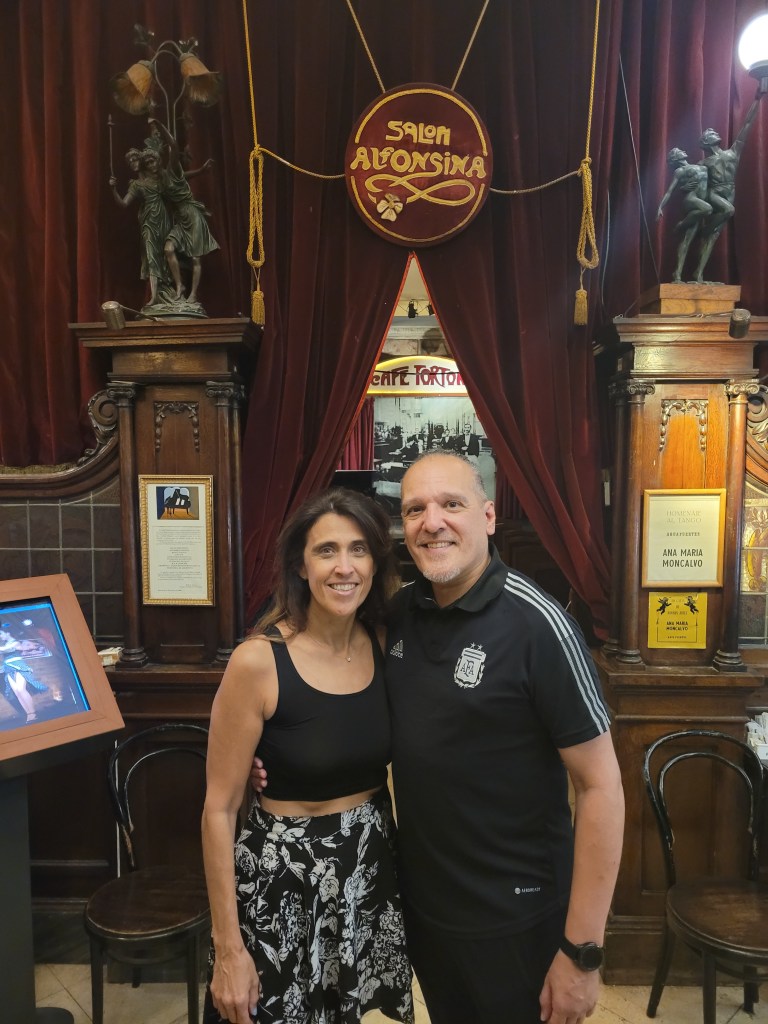
Flavia Mercier with Pancho Martínez Pey in the «Café Tortoni», in front of the «Alfonsina» hall,
where they did the interview.

Does that give meaning to everything? Moments like that.

That gives meaning to everything.

Because that’s what holds you to life, right? Even in the worst moments.

It’s what holds you to what you are or what you’ve decided to be or take a chance on. Those are your triumphs. You unconsciously seek them, not because you say, «I want to achieve this,» but because you want all the time to be better at what you do. And things falls into place because people see and choose. When they choose you, it’s because you’re doing things right. I believe that everything that came my way was because I was doing things right.

That’s why you say that if people would bet…

Absolutely, if we all did things to get better and not just trying to scrape by, everyone would be much better off.

Very well, Pancho, we’ll leave it there, «up in the air,» to see if the message lands, even if it happens. Thank you for your time and this wonderful conversation. A pleasure, Pancho.

Pancho Martínez Pey suggests that tango has been plagued with «merchandising,» risking becoming just another market commodity due to the commercialization of its teaching. In addition to this reality, contemporary society, governed by the principles of performance, pushes for hyperactivity and utilitarianism. Things are expected to have a «why.» Time is regarded as capital to be invested in exchange for profit, and if it is not used for a purpose, it is seen as a waste of time. Under the influence of this utilitarian conception, the social gathering which originally was a milonga, increasingly resembles a gym, according to Pancho. It’s no longer sufficient to just listen to a tango or converse with friends to enjoy it. It’s so dissonant as attending a banquet expecting to be served like in an all-you-can-eat buffet. The paradox is that, in this frenzy, life slips away like water through one’s fingers. Without a stop, there is no chance for inhabiting; one must dwell long enough to construct a dwelling for oneself. Furthermore, in the count of “tandas” danced per night, no one is being taken into account, as Pancho rightly points out.

The market has penetrated the very heart of tango, not only in its teaching but also in its practice when attempting to achieve a return on the money invested in lessons or the entrance ticket, valuing the milonga or the event by the number of “tandas” danced or the «level» of the dancers to whom one gains access. In the pursuit of securing a satisfactory moment, the chance of experimenting the extraordinary is lost.

An effect of mercantilism and utilitarianism is that culture suffers and deteriorates, as is it birthed within a community when life extends beyond mere survival. Imagination and creativity flourish in wandering more than in the non-stop running that hinders encounters and finds. It is during the pause when the echoes of what has been felt resonate within the body, leaving an imprint that will procreate experience, adhering to mere memory. After all, “la emoción está compuesta por cosas del ayer”, and it’s in resonance that it would find its beat.

Life takes on another dimension as its episodes  gain significance. When the experience is collective, its periodic celebration forms a shared emotional memory that weaves bonds among its participants and a cultural tradition, especially when there is room for recollection in shared conversation. Thus,”la eterna fiesta de los que viven al ritmo de un gotán”, may become a place of reunion and reencounter that enlightens life with joy and cushions its harships with affection, so that life is not reduced to “una herida absurda en la que todo, todo, es tan fugaz.”

Flavia Mercier

Patio de Artistas – Artists’ Patio

Patio de Artistas – Artists’ Patio

The sun has completed its performance. The moon illuminates the chairs that await by the side of a patio where life was a flow and sometimes flew. On one side, a zinc watering can rest next to a pot full of petunias. I arrange the chairs. I bring closer a round table with iron legs and a ceramic top. I don’t know if its drawings are blue, or if the nocturnality bathed in moonlight paints everything in that color. I sit down and wait.

In the background, a grapevine climbs up a column and extends along some trellises from wall to wall. Lush like a natural canopy, it shields from the summer sun at noon. Beneath it, there sleeps a long wooden table and a bench, along with some stacked chairs.

Sitting in the fainting light, I close my eyes and open my soul to echoes of other times. The body becomes a sounding board. Laughter, songs, guitars, slightly scratched records, and applause from other patios where one enters without knocking can be heard. Echoes that inscribe a score of stars on the night’s blackboard for a new performance. Another guest comes to tell me how she or he did it, how she or he dreamed it.

It’s not a coincidence that I choose a Patio to welcome artists.

The patio was the stage where a little girl performed in front of cousins and grandparents when a sheet her mother hung from the grapevine served as a curtain.

In those tiles were imprinted, while playing with his grandfather, the first tap dancing steps of the one who hadn’t even dreamt of becoming a dancer yet.

A greenish bronze pipe, still anchored to the wall, evokes the wounds of those feet that dreamt of being on pointe even when the piggy bank was empty.

The jasmine that perfumes the wall witnessed the first moves of the girl dancing embraced to her father, to the 2×4 beat.

The patio was the rehearsal space where he sweated illusion, under the careful eye of his mother who lovingly embroidered his costumes.

Out of the very shadows in the corners of the patio, which used to scare him so much, a child imagined characters that now populate the stories he writes.

In the patio, many struck the first chords on a guitar. They learned to dance, to sing, to paint, to act. The patio bears witness to art as the ground on which one can stand to make a living, even one different from which the family novel or an exterior of closed doors predetermined.

A ground that sustains you in view of the fall when the void that makes room for desire becomes an abyss. Through art, a deep thirst for life can shape a glass, or the fire of eternal yearning can forge the chisel that sculpts the rock, twisting its destiny from lava.

Art is the fulcrum where power overcomes resistance. The artist tears open the sky with their voice or instrument, and the divine bathes the earth, making it fertile; it sets into dance what would otherwise spin endlessly in the same place.

The patio was the place of the long table where family and friends gathered to eat. A meeting place and a haven. A place to «ramble on» beneath the grapevine’s shade. Philosophical afternoons and nights where everything from staging to life itself was conceived.

The patio speaks of our ways of experiencing emotions, customs whose traces go back to our grandparents’ lands; and in that sense, it represents a common ground that unites artists and communities.

«Patio de Artistas» as our very place that shelters them is the reason for the name of a magazine that aims to be, above all, a space for listening to artists. With «inter-views» that reveals more than just words. A tapestry where, between questions and answers, what was risked into work is stitched. A mirror whose reflections can illuminate the path of those who play in the courtyard today.

Like a spotlight that illuminates the center of a stage as it awaits the artist, a beam of moonlight seeps through the grapevine’s leaves, illuminating the center of the patio. The neighborhood is quiet, a dog barks in the distance. A neighbor listens to tango. The raspy voice phrases like no other: » Uno busca lleno de esperanzas, el camino que sus sueños prometieron a sus ansias…». My guest arrives. He enters without knocking. I kindle a garland of lights that borders the patio’s cornice. I give him a hug, and we sit down to talk.

Flavia Mercier

Sergio Cortazzo e Silvia Carlino: «Il tango è ballare con una persona e farla sentire bene».

Con quasi 40 anni di esperienza come ballerino di tango, Sergio Cortazzo, anche maestro e coreografo, è stato protagonista di alcuni dei momenti più memorabili della scena tanguera. Dopo essersi formato con grandi ballerini come Gustavo Naveira e icone della milonga come Pupi Castello, Juan Bruno, Pepito Avellaneda, Antonio Todaro e Mingo Pugliese. Sergio ha ballato in quasi tutte le case del tango più famose, come il Bar Sur, Casablanca, Michelangelo, Señor Tango, El Viejo Almacén, Taconeando, La Ventana, Piazzolla Tango e l’Esquina Homero Manzi. E poi sono arrivati i viaggi in Giappone e le grandi compagnie. Indimenticabili sono state le sue coreografie di «Gallo Ciego» e «Mala Junta» in «Tango x2» insieme a Gachi Fernández, e «Chiqué» con Soledad Rivero in «Tango Metrópolis». Ha fatto parte anche della compagnia «Tangokinesis» della rinomata ballerina e coreografa Ana María Stekelman, che fondeva elementi del tango con la danza contemporanea. Va sottolineata anche la sua partecipazione allo spettacolo «La Milonga», che riuniva noti milongueros come Pupi Castello, Mingo Pugliese, Marta Antón, il «Alemán» (Roberto Tonet), Pocho Pizarro e molti altri. Insieme a Sergio, Silvia Carlino, che, con oltre 20 anni di esperienza come ballerina di tango e dopo aver ballato in Europa con alcuni dei ballerini più famosi, oggi organizza una delle milonghe più importanti d’Italia, la milonga «C’è Tango al majestic», dove gestiscono anche la loro scuola di tango. Un’intervista che trasuda amore per il tango come arte e come espressione culturale che unisce una comunità.

Sergio Cortazzo e Silvia Carlino.

Sergio, come hai capito che volevi diventare un ballerino professionista di tango?

Stavo studiando presso la «Casa del Tango» di La Plata – dove vivevo – quando è sorta l’opportunità di partecipare a uno spettacolo teatrale presso il «La Comedia» (teatro) nella provincia di Buenos Aires, dove serviva una coppia di tango. Era una commedia di Alberto Vaccarezza chiamata «Tiempo de firulete». Per due anni siamo stati in tournée in tutta la provincia con musicisti e attori, ricevendo anche uno stipendio. Quindi ho pensato: «Ah, si può vivere facendo ciò che si ama!»

Solo allora ho deciso di viaggiare a Buenos Aires per dedicarmi al tango più seriamente. Durante quella tournée ho scoperto quella grande passione che fino ad allora avevo visto nei musicisti o negli attori, e che hanno le persone che fanno ciò che amano. Per lavorare come artista hai bisogno di questa grande passione, altrimenti non ce la fai. Ti pagano male, i lavori sono instabili, la strada è molto dura. Devi avere ben chiaro che ti piace, per continuare nonostante le avversità.

E cosa ti ha spinto, prima di voler diventare un professionista, ad imparare a ballare il tango?

In realtà, è un po’ difficile da spiegare. In casa avevamo alcuni dischi di tango, ma non li ascoltavamo molto. I miei genitori non ballavano né erano artisti. Mio padre è un dottore in sociologia economica e mia madre una psicologa. Tuttavia, mi hanno aiutato molto.

Forse è stato durante un viaggio in America Latina in cui la gente mi diceva «Ah, l’Argentina. Tango». È lì che ho sentito che il tango era qualcosa di cui essere fieri. Non mi sono mai sentito molto orgoglioso di essere argentino. Dopo aver sentito Alfonsín dire «la casa está en orden», sono diventato abbastanza scettico (“la casa è in ordine”, frasi pronunciate dall’ex presidente Raúl Alfonsín, dopo aver sedato una ribellione militare mediante un accordo con le Forze Armate che ha portato all’emanazione delle leggi «Punto Final» e «Obediencia Debida,» he hanno interrotto il processo di giudizi per i crimini della Dittatura Militare). L’Argentina è piena di contraddizioni e a volte non c’è molto da essere orgogliosi. Ma il tango ha dato questa possibilità a tutti i ballerini che si trovano all’estero.

«Questo è il tango, ballare con una persona e farla sentire bene. Non «usarla» per fare passi e mostrare agli altri quanto sei bravo.»

Sergio Cortazzo

E così, quando avevo circa 22 anni, ho deciso di andare  alla «Casa del Tango», mi sono informato e ho iniziato a prendere lezioni. Abbiamo formato un gruppo con cui uscivamo per andare in tutte le milonghe della città. Così ho capito che mi piaceva ballare, ma ancora non avevo il coraggio di abbandonare l’ingegneria e dedicarmi esclusivamente al tango. Non so se non avevo il coraggio o semplicemente non mi veniva in mente, perché all’epoca a La Plata c’era molto poco tango e non avevo neanche immaginare che potesse diventare una professione. È stato col tempo, quando ero già a Buenos Aires, che ho deciso di abbandonare gli studi e dedicare tutto il mio tempo alla mia formazione come ballerino di tango.

In riferimento alla danza o all’arte, hai studiato qualcos’altro oltre al tango?

Nel momento in cui ho iniziato a ballare il tango, ho cominciato anche a studiare un po’ di recitazione. E una volta arrivato a Buenos Aires, quando ho deciso di diventare un ballerino professionista, ho deciso di studiare un po’ di balletto classico per migliorare i movimenti e il corpo. Ho preso lezioni di danza classica e contemporanea per due o tre anni.

Chi sono stati i tuoi maestri di tango?

Pupi Castello, Juan Bruno, Gustavo Naveira, Pepito Avellaneda, Antonio Todaro, Mingo Pugliese.

Ah!, nessuno di rilievo… (risate) E come è stato imparare da loro?

Erano molto entusiasti del fatto che ci fossero giovani appassionati di tango e ci dedicavano molta più attenzione rispetto agli «habitués» (frequentatori abituali). Andavamo alle lezioni «per amore del tango», potremmo dire, per il piacere di imparare. Non pensavamo a viaggiare o a lavorare, perché in quel momento queste opportunità non esistevano. Stiamo parlando di un periodo in cui nessuno poteva immaginare che il tango sarebbe esploso in tutto il mondo e sarebbe diventato ciò che è oggi. All’epoca, al massimo, potevi lavorare in qualche locale di tango e con un po’ di fortuna potevi avere un’occasione di viaggiare in Giappone. «Tango Argentino» stava appena cominciando. Naturalmente, la pedagogia era quella che era, non spiegavano molto, ma ci si rendeva conto che facevano uno sforzo per trasmettere le loro conoscenze.

«…per quanto riguarda l’espressività, si è perso un modo di imparare le cose che influisce molto sull’aspetto artistico. Il processo di apprendimento è molto più freddo, le sensazioni non entrano. Non entrano le esperienze vissute, che si ottengono imparando in modo più artigianale, più «umano», si potrebbe dire.»

Sergio Cortazzo

Immagino che questa posizione abbia influenzato il tempo di apprendimento. Immangino che, quando si studia per piacere, non si ha fretta di imparare o di ottenere risultati rapidi.

Sì, è vero, era così. Inoltre, poteva anche capitare che uno copiasse un movimento del maestro, ma in generale si cercava di farlo a modo proprio. Invece, ora, come dici tu, si cercano risultati rapidi, quindi il percorso più veloce è copiare il maestro o un video su YouTube. Si pensa che copiando i passi del maestro più popolare si otterrà lavoro e successo in breve tempo.

All’epoca, non c’erano nemmeno i video. Quindi, un’altra cosa bella era che se volevi vedere come ballava un milonguero, dovevi andarlo a vedere in milonga. Ti davano il volantino o il depliant in cui annunciavano la sua esibizione, prendevi “el bondi” (l’autobus) e facevi un’ora di viaggio, o più, fino alla milonga. Dovevi andare a cercare ciò che desideravi, non era a portata di clic su un computer o su un cellulare. In quel periodo dovevi fissare l’istante nella memoria. Se non lo praticavi subito, lo dimenticavi. Non potevi nemmeno registrarti per guardarti dopo. Dovevamo andare alla lezione del milonguero e chiedergli spiegazioni su ciò che non riuscivamo a fare. Poi ci incontravamo per allenarci o per scambiarci alcuni passi. Tutte queste «difficoltà» mettevano alla prova quanto amassi davvero il tango.

La grande differenza rispetto a quei tempi è che si imparava perché ti piaceva. Non pensavi a viaggi, tour, a trasferirti in un altro paese per lavorare; tutto questo non esisteva in quel momento. Lo facevamo per amore del tango. Imparare qualcosa solo per il gusto di farlo. C’era anche molta solidarietà, perché non c’era concorrenza e non c’era molta competizione. Nessuno di noi aveva in mente una carriera. In effetti, eravamo un po’ inconsapevoli: stavamo dedicando molto tempo a qualcosa di cui non sapevamo se avrebbe avuto sbocchi lavorativi.

Come si traducono sul palcoscenico o nelle esibizioni queste differenze nei processi di apprendimento?

A mio avviso, oggi ci sono persone tecnicamente molto brave ma meno espressive. La qualità tecnica è molto superiore alla qualità espressiva ora. Hanno molte possibilità per studiare con molta attenzione e al dettaglio dei passi. Possono mettere in pausa un video, avanzarlo e riavvolgerlo quante volte è necessario. Ma per quanto riguarda l’espressività, si è perso un modo di imparare le cose che influisce molto sull’aspetto artistico. Il processo di apprendimento è molto più freddo, le sensazioni non entrano. Non entrano le esperienze vissute (con enfasi), che si ottengono imparando in modo più artigianale, più «umano», si potrebbe dire.

Si potrebbe dire che voi, in un certo senso, in quel periodo, mentre sviluppavate la vostra danza, stavate costruendo l’artista dentro di voi. Vi stavate scoprendo con ciò che ognuno voleva esprimere.

E tu, Silvia? Come hai iniziato con il tango? O con la danza?

Ho iniziato molto piccola con il balletto. A 8 anni già ballavo. E l’ho abbandonato definitivamente quando avevo circa 23 anni. Ho studiato in Una scuola di danza di alto livello qui a Napoli. Ma la verità è che la danza classica mi ha molto delusa. Inoltre, non ho nemmeno il corpo per il balletto. Il mio corpo è quello di una ballerina di tango. Sì, direi che una  sylphide non sono mai stata (risate).

Ho ballato anche un po’ di danza contemporanea e ho fatto teatro. In quel periodo ho anche fatto qualche spettacolo, sia di danza contemporanea che di classico, che di teatro. Per un po’ ho anche insegnato danza ai bambini o ho organizzato alcuni spettacoli di fine anno nelle scuole elementari.

Ma la verità è che non mi piaceva e l’ho lasciato. Per molto tempo ho smesso di ballare o di lavorare nella danza. Lavoravo con mia madre in un negozio di abbigliamento e ho scoperto che la moda mi piaceva molto. Disegnavo alcuni modelli, qualche abito da sposa, anche se non ero andata a scuola di design. Tuttavia, sapevo che non era definitivo nel mio percorso, né il negozio né la moda. Sapevo che sarebbe successo qualcosa.

Un giorno mi è arrivata per errore una rivista nel negozio, in cui proprio in prima pagina c’era una foto di una coppia di tango, e la ballerina sembrava meravigliosa. Non ricordo chi fosse. C’era un intero articolo su Buenos Aires. Ho iniziato a leggerlo e alla fine c’era un piccolo annuncio di una scuola di danza dove veniva insegnato il tango. Ed era quasi accanto a casa mia! Quindi ho deciso lì per lì di andare e pochi giorni dopo ho cominciato a prendere lezioni. Mi è sembrato che mi sarebbe piaciuto. Stiamo parlando di 22 anni fa, non c’erano così tanti video come ora per capire di cosa si trattasse.

E come sei arrivata, dopo aver letto un articolo in una rivista, ad organizzare una delle milonghe più importanti d’Italia?

Beh, all’inizio ho cominciato a cercare dove poter imparare a ballare il tango. Prima ho viaggiato per l’Italia cercando argentini che lo insegnassero, perché a Napoli non ce n’erano molti. Non c’erano nemmeno molti maestri come ora, anche se i ballerini stavano cominciando a viaggiare e a venire in Europa. Ho iniziato a frequentare i festival. Fino a quando un giorno ho pensato: «Devo andare a Buenos Aires a prendere lezioni». E così ho fatto. Ricordo che la prima volta mi hanno accolto a Ezeiza, Josep e Teresa (Josep Morera e Teresa Herrero Aubanell, organizzatori per molti anni di una delle milonghe più conosciute di Barcellona), che avevo conosciuto al Festival di Napoli. Mi davano consigli su dove andare, con chi prendere lezioni. Ho preso lezioni da tutti. Iniziavo a mezzogiorno e continuavo fino a mezzanotte, poi uscivo a ballare, a ballare e a ballare… sempre. Ricordo ancora la sensazione incredibile che ho avuto alla mia prima milonga a Buenos Aires, a Canning. Fino a quando un giorno ho iniziato a lavorare qui in Italia con diversi ballerini.

Dopo ci siamo conosciuti, lui (Sergio) è venuto al Festival di Napoli per tre anni di seguito. Ci siamo conosciuti al secondo! Poiché in quegli anni faceva molte tournée in Europa, abbiamo cominciato a viaggiare per vederci. Finché è venuto a vivere qui a Napoli e abbiamo cominciato a lavorare e insegnare insieme. Un giorno i proprietari del Club Majestic, che apprezzavano il nostro lavoro, che avevano fiducia nel nostro modo di insegnare e comprendere il tango, ci hanno proposto la possibilità di portare la nostra scuola nel loro club e di organizzare la milonga. E abbiamo deciso di accettare. La verità è che ci va piuttosto bene. Prima della pandemia abbiamo organizzato numerose esibizioni e portato molti artisti e orchestre. Quest’ultimo anno abbiamo continuato a portare artisti e vorremmo portare anche un’orchestra.

«Ero incantata a guardare  i ballerini che ballavano con la musica dal vivo. Quella cosa della ronda, tutti improvvisando insieme, ognuno con il suo stile, tutti diversi, ma in armonia. “Come fanno?, come fanno?”, mi chiedevo. Sembrava magico. Ed è stata quella magia che mi ha spinto a prendere un aereo per andare dall’altra parte del mondo.»

Silvia Carlino

Cosa ti affascinava del tango?

La musica. Da subito, è stata ciò che mi ha affascinato di più. E poi i costumi nelle esibizioni. Poiché mi piaceva tutto ciò che riguarda la moda. Ricordo il primo festival che ho visto, che si è svolto qui a Napoli e lo ha organizzato Miguel Angel Zotto, con il sostegno del Comune, con star internazionali del tango che arrivavano direttamente dall’Argentina. Sono venuti lui e Mantiñán con Missé , Teté, Eduardo e Gloria Arquimbau, Facundo e Kely, e l’orchestra dal vivo. Ero incantata a guardare  i ballerini che ballavano con la musica dal vivo. Quella cosa della ronda, tutti improvvisando insieme, ognuno con il suo stile, tutti diversi, ma in armonia. “Come fanno?, come fanno?”, mi chiedevo. Sembrava magico. Ed è stata quella magia che mi ha spinto a prendere un aereo per andare dall’altra parte del mondo.

E cosa ha rappresentato per te, venti e più anni dopo essere entrata in quella prima milonga a Canning, ballare al Festival di La Plata con Sergio Cortazzo?

Bellissimo, davvero bellissimo. Il giorno prima avevo pensato che sarei stata nervosa, ma non lo sono stata. Il Festival è incredibile, ti dà un’energia…! Ricevo un’energia diversa quando si tratta di un evento così popolare, ha influito su di me  in modo molto positivo, non ho sentito alcuna pressione. E considera che stavo ballando non solo con Sergio Cortazzo, ma con il figlio di La Plata. Inoltre, c’erano i genitori di Sergio, la sorella, amici di una vita, tanta gente che non ci aveva mai visto ballare insieme dal vivo. Ma quando sei circondata da persone che ti vogliono bene, l’energia è sempre positiva. Il Festival La Plata Baila Tango è incredibile. In effetti, a La Plata è stata una delle nostre performance che mi è piaciuta di più. Anche al Festival di Barcelona Tango Amigo mi sono sentita così. Anche se a volte mi capita il contrario, come quando abbiamo ballato a Budapest, proprio perché non conoscevo nessuno abbiamo ballato tutto in modo improvvisato ed è stato fantastico, mi piace molto quella performance.

E guardando indietro, come ti senti ad arrivare a quel momento così speciale? Hai pensato «ce l’ho fatta»?

Beh, è magia. Ci sono momenti, ancora adesso che ci penso, mi chiedo: «Forse ce l’ho fatta, anche se a volte mi fanno male le ginocchia? O forse l’ho raggiunto proprio perché mi fanno male?» La verità è che è stato un lavoro, lavoro, sudore, sudore, cercando di seguire tutto quello che Sergio mi diceva – che non è affatto facile perché Sergio è molto esigente, ed è per questo che ci ho messo così tanto a convincermi a ballare con lui, dovevo fare i miei chilometri come diceva lui -, ma alla fine la sensazione di avere la pelle d’oca mentre si è lì è il premio che arriva dopo tanto sforzo.

E tu, Sergio, come è proseguita la tua carriera professionale dopo quella prima esperienza con il cast de «La Comedia»?

Ho iniziato dalla base, poco a poco. Prima al «Bar Sur», ballando tra i tavoli dalle 10 di sera alle 4:30 del mattino, con un pianista che ci accompagnava. Poi al «Los dos pianitos». Successivamente al «Casablanca”. Infine, nello spettacolo «La Ventana» ho avuto la mia prima opportunità come partner solista.

Silvia: E lo spettacolo che hanno trasmesso un mese fa? Non se lo ricorda, come non gli piace dare importanza… Ti racconto: un mese fa hanno proiettato uno spettacolo («La Milonga«) in cui ballava con Pupi (Castello). Immagina uno spettacolo di quegli anni che è stato registrato, è stato qualcosa di importante. Oltre a Pupi, c’erano tutti i milongueros importanti. C’era Mingo Pugliese, Marta Antón, l'»Alemán» (Roberto Tonet), Pocho Pizarro e molti altri. Volevo uccidermi quando l’ho visto perché avrei potuto mostrarlo agli allievi, avrei potuto mostrargli «chi è lui». Ma no, perché lui non gli dà importanza.

Ma è che lui balla per il piacere di ballare, per amore del tango, come quando ha iniziato (risate) E poi, Sergio, come è andata?

Finalmente, è arrivato il mio primo viaggio in Giappone. Da tempo mi chiedevo quando mi sarebbe toccato andare in Giappone, perché in quel periodo era come laurearsi. E vedevo che tutti ci andavano e a me no. Fino a quando mi hanno proposto questo tour con un’orchestra diretta da un pianista di La Plata, con un cantante e tre coppie.

Poi è arrivato «Tango X2» e ho sentito di essere entrato nella «nazionale», anche se in quel periodo c’era anche «Tango Argentino», che era famosissimo in tutto il mondo. Ma per i milongueros «Tango X2» era come giocare nella Nazionale di calcio, perché rifletteva meglio il tango più autentico, quello della milonga. «Tango Argentino» era più stereotipato. Senza sminuirlo.

«Questi momenti rappresentano una grande soddisfazione per me, perché ho ballato nello spettacolo che piaceva a tutti i milongueros e in più, gli piaceva quello che Io facevo.»

Sergio Cortazzo

Sono stato anche per un bel po’ di tempo in «Tangokinesis», con Ana María Stekelman, all’inizio. E molto tempo dopo è arrivato «Tango Metrópolis» con Claudio Hoffman e Pilar Álvarez, dove ballavo con Soledad Rivero. Queste sono state le compagnie con cui ho lavorato di più. Nel frattempo, ho continuato a lavorare nelle Case di tango a Buenos Aires.

E com’è stata l’esperienza di fusione tra il tango e la danza contemporanea (Tangokinesis)?

All’inizio pensavo «quando mi vedranno i milongueros mi diranno di tutto». Ma la verità è che io e Gachi (Fernández) abbiamo imparato molto da Ana: la messa in scena, il modo di presentare la danza sul palcoscenico e tutto l’aspetto coreografico. È stata una grande esperienza per noi, che ci ha portato ad un’apertura mentale senza perdere le radici. È stato un aggiungere senza perdere ciò che volevi fare. Perché il materiale era piuttosto tanguero, per quanto riguarda i passi, ma con musica «strana». Per esempio in “Libertango» nella versione di Grace Jones, potevamo ballare sui rumori come spari e porte che si chiudevano. Abbiamo avuto la  possibilità di aggiungere linguaggi diversi e una visione diversa del tango. Credo che per l’epoca fosse molto originale. Beh, è ancora molto originale. Oggi c’è gente che pensa di innovare e cade nei luoghi comuni. Per innovare devi prima fare una ricerca su ciò che è stato fatto prima per evitare di cadere nella trappola del solito. E conoscere bene a fondo quell’arte che vuoi rinnovare. Piazzolla prima di rinnovare il tango, ha suonato con Troilo.

«Per innovare devi prima fare una ricerca su ciò che è stato fatto prima per evitare di cadere nella trappola del solito. E conoscere bene a fondo quell’arte che vuoi rinnovare. Piazzolla prima di rinnovare il tango, ha suonato con Troilo.»

Sergio Cortazzo

Come vedi il tango da palcoscenico al giorno d’oggi? C’è poco, ti preoccupa?

Io credo che si stia verificando un vuoto generazionale. Il tango da palcoscenico è mantenuto vivo dalle Case di tango e dal Campionato del Mondo, ma al di fuori di ciò non c’è molto lavoro, non ci sono molti spettacoli o tournée di tango.

Inoltre, ci sono pochissimi ballerini in grado di fare bene entrambe le cose. Ci sono ballerini da palcoscenico che quando li vedi  improvvisare in una milonga, pensi, «questi non sanno ballare il tango», perché sono abituati solo a fare coreografie. E, d’altra parte, vedi ballerini da esibizione, molti dei quali sono grandi ballerini e hanno molto successo, ma li metti su un palco e spariscono, o non trasmettono, mostrano passi, non è un fatto artistico. Per me sono ballerini che sono rimasti un po’ indietro, che non hanno fatto tutto il percorso che avrebbero potuto fare, perché fanno solo quello, in parte perché ormai ci sono poche compagnie di tango. 

«La verità è che è stato un lavoro, lavoro, sudore, sudore, cercando di seguire tutto quello che Sergio mi diceva – che non è affatto facile perché Sergio è molto esigente, ed è per questo che ci ho messo così tanto a convincermi a ballare con lui, dovevo fare i miei chilometri come diceva lui -, ma alla fine la sensazione di avere la pelle d’oca mentre si è lì è il premio che arriva dopo tanto sforzo.”

Silvia Carlino

Si è entrati in una frenesia di viaggi, di guadagni, di benessere economico che non permette di guardare  il giorno per giorno; e ci sono molti ballerini professionisti che forse sentono che «hanno già raggiunto» e non continuano a formarsi, non si preoccupano di progredire come artisti. Forse sentono che stanno perdendo livello se prendono lezioni da altri, o che non ne hanno più bisogno se tutto funziona bene.  Io credo che quando si fa una performance, anche solo in una milonga, deve essere un fatto artistico. Non bisogna ballare solo per mostrare passi perché ti porta allievi, ma per trasmettere qualcosa di più.

Sergio, hai menzionato sia Gachi Fernández che Soledad Rivero come compagne di ballo. Con entrambe hai formato coppie molto importanti che hanno lasciato momenti emblematici nel tango da palcoscenico. Come si fa a lasciare una coppia e a formarne un’altra che funzioni altrettanto bene sul palcoscenico, avendo stili diversi?

La verità è che con Soledad Rivero l’intesa come coppia di tango l’abbiamo trovata  molto velocemente. Il periodo in cui ho formato coppia con lei è stato molto intenso e produttivo. Abbiamo fatto innumerevoli tournée. Una delle più importanti è stata come coreografi dei campioni di tango da palcoscenico in Giappone e Taiwan, per tre mesi. È stato un vero piacere lavorare con Soledad.

Silvia, come vedi le milonghe confrontando l’Argentina e l’Italia?

Mi sembra che in Italia gli stili si mescolino di più: il milonguero come Gavito, il salone pulito e i giovani che fanno un po’ di confusione (risate). In Argentina, è cambiato molto tutto – ad esempio, non si vede più come una volta quel rispetto assoluto che i giovani ballerini avevano verso i maestri – ma ancora si può vedere un tango salon  pulito. L’altra cosa è che nelle milonghe non ti fanno ballare tanto come facevano prima, e questo accade già alcuni anni . Invece, l’atmosfera del Festival de La Plata mi ha ricordato di più come erano le milonghe fino a qualche anno fa: i sorrisi delle persone, la gente rilassata, tutti si salutavano, godersi il tango, la milonga, la musica

Sergio, parlando di momenti importanti, quali momenti hai conservato nella memoria come i più significativi?

Non lo so, … La verità è che come artista non vivo ancorato al passato dicendo: “wow, ho ballato per …». Non so, non do importanza al fatto che : “wow Ho ballato al City Center di New York».

L’hai fatto?

Sì, con «Tango X2» …. Non sto nemmeno tutto il tempo dicendo che ci sono due articoli di un giornale di New York che parlano di me. Come si chiama? Oh, non mi viene in mente… il New York… Times.

Silvia: No, Sergio, non ti nominano solo! Sono due articoli del New York Times che parlano  di te e di Gachi  come due stelle meravigliose, due ballerini incredibili! Scusami, ma mi alzo e me ne vado (con tono sarcastico)! … Gli costa parlare di sé…

Sergio: Beh, va bene, forse un giorno lo racconterò a mio nipote, ma, che ne so, non ci do importanza.

Va bene, ma la domanda mirava a qualcosa che fosse speciale «per te», qualcosa che ti abbia emozionato molto o che ti abbia colpito.

Se devo raccontarti un momento della mia vita professionale che mi ha dato una bella sensazione, devo parlarti del periodo in cui eravamo nella compagnia  «Tango X2» al Teatro Avenida. Il mercoledì si poteva entrare pagando l’ingresso a metà prezzo. E per tre o quattro mesi, durante la stagione, ogni mercoledì era pieno di milongueros, di gente del tango, che addirittura tornava due o tre volte a vedere lo spettacolo. E alla fine ci facevano un applauso infernale a tutti, e soprattutto a me in molti momenti dello spettacolo. Uno di questi momenti, per me il migliore, era il tango che facevamo noi («Mala Junta» con Gachi Fernández). Questi momenti rappresentano una grande soddisfazione per me, perché ho ballato nello spettacolo che piaceva a tutti i milongueros e, in più, gli piaceva quello che Io facevo. Quindi stavamo ballando per un pubblico esperti che ci applaudiva come pazzi.

«Io credo che quando si fa una performance, anche solo in una milonga, deve essere un fatto artistico. Non bisogna ballare solo per mostrare passi perché ti porta allievi, ma per trasmettere qualcosa di più.»

Sergio Cortazzo

È evidente che ciò che ti commuove è l’aspetto artistico, non la fama. C’è un Sergio al di là di Sergio Cortazzo l’artista?

Silvia: Lui è solamente un artista. Non sa fare nient’altro. Non può.

Sergio: Fuori dal palco o dalla pista, non ho nulla a che fare con come sono quando ballo. Il tango mi permette di esprimere qualcos’altro, molto di più di quanto possa esprimere con le parole. La parola mi costa. Ho trovato nel tango un modo di espressione.

Silvia: La parola non è il suo forte. Guarda che è anche molto bravo come mimo o nell’imitare, è geniale. C’è un video di lui, famosissimo, in cui imita Pupi.

Sergio, dopo quasi 40 anni nel tango, quando dai lezioni, cosa ti preme di più trasmettere?

Una cosa che ci preoccupa è che qui in Italia, in Europa, è difficile trasmettere il sentimento del tango. È molto difficile, soprattutto se gli stranieri non vanno a Buenos Aires. Anche se Buenos Aires è cambiata molto. Mi riferisco a ciò che si prova quando si entra in una milonga, certe forme, come invitare la donna a ballare in un certo modo, cercare di comunicare con la partner, non solo fare passi ma far sentire bene la persona. Questo è il tango, ballare con una persona e farla sentire bene. Non «usarla» per fare passi e mostrare agli altri quanto sei bravo. Il tango è diventato molto esibizionista ultimamente. Ma è chiaro che è difficile per gli stranieri capire il tango al di là di alcune abilità di movimento, perché non sempre hanno buoni esempi. Se uno straniero vede che il maestro fa solo quello, si chiederà perché dovrebbe preoccuparsi di altro.

Sergio Cortazzo e Silvia Carlino con Flavia Mercier durante l’intervista online.

La nostra soddisfazione è che gli studenti che rimangono con noi sono persone rispettose, con una certa sensibilità, che sanno come comportarsi in milonga, divertirsi, ballare per godersi il momento, molti di loro finiscono per diventare amici tra loro. Questo è una soddisfazione perché, con un po’ di tango, trasmettiamo anche un modo di relazionarsi e condividere.

Grazie mille a entrambi, Silvia, Sergio, è stata una conversazione «incantevole». Di quelle che ti lasciano a riflettere.

Potremmo pensare allo stile come quei dettagli che l’artista imprime nella sua opera a causa di ciò che lo influisce, spingendolo a esprimere questo impatto nell’arte. Lo stile deriva, quindi, da una serie di scelte, in quanto si preferisce un tratto, un gesto o un movimento, tra gli altri. Si tratta di una scelta che mette in gioco l’intimità e si esprime in un modo tutto suo. Inoltre, il suo pubblico si forma con coloro che si commuovono per questi dettagli distintivi.

Se pensiamo alle arti popolari come il tango, potremmo definirlo in termini di un «distillato di aromi e sapori» che conferisce un sapore unico alla danza o all’interpretazione musicale e che sempre fa riferimento alla terra come simbolo del fondamento di quest’arte. Va ricordato che è grazie ai tempi di cottura e riposo che il sapore si forma dalla combinazione degli ingredienti, distillando un aroma che stimola la voglia. Allo stesso modo, un insieme di elementi tecnici, per eccellenti che siano, non saranno sufficienti per creare uno stile proprio se non si concede il tempo per farlo decantare. L’opera d’arte o la composizione coreografica non è altro che un oggetto distaccato dalla realtà per l’artista e determinato da un desiderio di commuovere coloro a cui si rivolge.

Sergio Cortazzo afferma che si sta perdendo l’espressività o la qualità interpretativa, nonostante si sia guadagnata una grande qualità tecnica nella danza. Sottolinea che il processo di apprendimento, come si svolge oggi, non sta funzionando completamente. Ci dice inoltre che insieme alla sua tecnologizzazione è diventato «più freddo», lasciando fuori «le esperienze personale» del processo. Parte della dimensione educativa sembra essere andata persa.

Nelle sue origini, la figura del pedagogo era quella di colui che accompagnava il bambino o la bambina a scuola. Quindi, l’educazione sarebbe l’accompagnamento da parte dell’insegnante in un percorso che lo studente deve compiere da solo. È nel percorso che l’artista troverà il suo stile, quando le difficoltà lo porteranno a conoscere i suoi limiti e metteranno alla prova il suo desiderio. L’ostacolo, la pietra sulla strada, è ciò che che fa nascere e stimola la creatività.

La funzione dell’insegnante sarà quella di fornire supporto mentre accompagna, come un impalcatura che potrà essere rimossa quando la casa della conoscenza si stabilirà su fondamenta solide e la struttura sarà disposta in modo che sia un luogo abitabile, un luogo in cui vivere. Quella guida non potrà mai essere data da una piattaforma digitale carica di video.

Flavia Mercier

Pancho Martínez Pey: “El tango te desnuda, ves a la gente bailar y ves cómo es.”

Bailarín, milonguero, coreógrafo, maestro de tango danza, cantor de tango y actor, Pancho Martínez Pey es hoy miembro del Consejo Internacional de la Danza, tras una trayectoria de casi 40 años con la danza, que empezó con el folclore. Con maestros como Héctor Falcón y Susana Rojo, Rodolfo Dinzel, y Petaca -entre tantos otros maestros milongueros-, Pancho no ha dejado nunca de estar entre las primeras figuras del tango tras debutar en el show de Michelangelo dirigido por Eduardo y Gloria Arquimbau. Destaca su rol protagónico en “Tanguera, el Musical”, o su paso por el musical de Nacha Guevara, “Tita: una vida en tiempo de tango”. Ha trabajado en las Casas de tango más afamadas, desde el mítico Caño 14 hasta Rojo Tango. Ha sido además jurado del Mundial de Tango desde prácticamente sus inicios. Participó en varias películas, entre ellas “Un tango más” el documental sobre la vida de María Nieves Rego y Juan Carlos Copes. Y es desde hace más de 20 años la pareja de baile de la gran María de Buenos Aires, María Nieves Rego. Una entrevista en la que Pancho además de compartirnos su historia, reflexiona a fondo sobre la actualidad de la práctica del tango, tanto social como escenario.

Ph. portada: terrygalindo

Pancho Martínez Pey. Ph.: terrygalindo

Pancho, vos venís de una familia de músicos con raigambre en el folclore. ¿Qué despierta en vos lo que vivías en tu casa? ¿O simplemente te dejaste llevar por eso?

Fue lo que se vivía en casa porque mi papá y mi tío son músicos y tocaban juntos desde los 18 años. Mi papá era muy buen guitarrista, era arreglador también, compositor; de hecho, hizo la música de un par de danzas folclóricas de proyección. Además de la guitarra, tocaba el contrabajo, y tocaba el requinto muy bien, ¿viste la guitarrita de los boleros? En casa todos los fines de semana había reunión familiar, y era tocar, bailar. Antes de los 8 años yo ya empezaba a bailar con mi mamá en las peñas folclóricas. El 2 de abril del 82 mi papá debutó con el grupo de folclore, el día que se recuperaron las Malvinas, y yo me acuerdo de ser parte y de bailar con mi mamá.

¿Tu mamá también era bailarina o bailaba informalmente?

No, no era bailarina, aunque quiso serlo, pero por esas cosas de la época que no la dejaban, que no podía, que no sé qué… A mi vieja le gustaba mucho bailar folclore y de chica había hecho danzas españolas. Se conoce con mi papá, y acá estoy.

¿Tocás algún instrumento, también?

Empecé como percusionista. Por el folclore, tocaba el bombo y aparte en el ballet hacíamos malambo, boleadoras, bombo, todo percusión.

¿Qué ballet era?

El Ballet Argentino Zupay, de Juan Cáceres, “Zupay”, y Elba Maceira quienes desde hace unos cuantos años están en Tenerife. Yo arranqué en el ballet a los 12 años. Antes iba a las peñas y tomaba algunas clases de folclore en Ramos Mejía -porque yo soy de Ciudadela-. Y al mismo tiempo arranqué también con el ballet de la Escuela Nacional de Danzas que se llamaba Tiempo de Folclore. Pero yo iba a todas las peñas, así como ahora soy milonguero, porque milonguero es el que sale todas las noches y va a todos lados a bailar.

Eras peñero.

Yo era peñero, iba con mi papá y mi tío, cargábamos los equipos, bailaba toda la noche hasta que terminaba la peña, y volvíamos a casa. Así me las pasaba todas las semanas. ¡Ni te cuento la primera vez que me compré las botas! Todo el día zapateando.

Pancho Martínez Pey bailando con el Ballet Argentino Zupay.

Y en tus primeras exhibiciones con los ballets ¿ya sentías alguna “cosita” por estar frente al público o te daba igual quién estaba delante y era sólo el placer de bailar?

Era el placer de bailar, a mí siempre me gustó bailar. De hecho, de cierta manera, ese brillo, o ese ángel, o lo que sea, la gente lo veía en mí, los que me conocían de chiquito hablaban bien de mí, pero yo no lo sentía. Yo era chico y lo único que quería era bailar.

¿Y cuándo pasás del folclore al tango? ¿Cómo llegás al tango?

Porque en el ballet empezamos a hacer coreografías de tango. Los primeros maestros que tuve fueron Héctor Falcón y Susana Rojo.

¡Ah! ¡Nada más ni nada menos! ¿Y qué sentiste la primera vez que los viste?

Me encantaron, eran geniales. La presencia, la impronta. Se agarraban, bailaban y era: “¡Uuuh!”, ¿viste? Te dejaban estupefacto.

Entonces ahí empezás.

Ahí arranco, coreográficamente. Después, en el 92, me llama un muchacho que había estado integrando el conjunto de folclore de mi papá, y que había encontrado trabajo en el circuito de Verbenas de España. Y yo que estaba trabajando en un banco, en tarjetas de crédito, y que justo había tomado algunas clases con Copes, le dije que sí y largué todo a la mierda y me fui. Un año y medio estuve recorriendo toda España. Tocábamos desde “Paquito, el chocolatero” hasta Los Lunes o Los Rodríguez, de todo para que la gente baile. Yo tocaba la batería, cantaba, y en los intervalos bajábamoscon la tecladista del grupo, ybailábamos tango y folclore para la gente, mientras él cantaba con la guitarra. Y yoterminaba haciendo un malambo.

¿Y?

Y… la gente se moría, ¡se moría! No me olvido más, en una localidad del norte, yendo para Galicia, que se llama Toreno, estábamos en la plaza -que era enorme-, nosotros y una orquesta de vientos, habría como tres mil personas, ¡una cosa de locos!; y cuando tocamos y bajamos y bailamos, la gente se murió.

¿Y vos qué abrochaste en esa vuelta para tu historia?

Yo me fui con muchas ilusiones, como todo chico joven: “Me voy afuera, puedo ganar plata… Cuando vuelva voy a poner un bar, tipo karaoke, con una pista para show y para que la gente baile, con músicos…” y ta ta tá. ¡Y volví con menos plata que con la que me fui! (Risas).

Ganaste en satisfacción, aunque el dinero no acompañó.

Total. Y ese viaje me marcó, me hizo crecer mucho como persona. A lo mejor, si yo hubiese estado acá, no hubiese visto lo que vi estando afuera, en cuanto a mí, a la relación con mi familia, a un montón de cosas. También, a lo que yo quería. No me olvido más, estaba muy triste, porque, aparte, en esa época era todo más difícil: ¡me mandaban VHS!, mis compañeros me mandaban cassettes y me decían “¿Qué hacés allá? ¿Por qué te fuiste? Volvé.” Yo estaba redeprimido. Todos estábamos medio tristes. Y un día, que volvíamos de una presentación…

¿Te acordás por qué estabas redeprimido?

Por la melancolía… Nos faltaban los códigos, que son diferentes. Los amigos, llamarte en dos segundos para juntarte a tomar un café, cagarte de risa de las mismas cosas.

Lo que te nutre.

Lo que te nutre. Tener que explicarle a un español cómo lo pensamos para que se pueda divertir con nosotros. Y porque yo, mentalmente, todavía era bastante chico, ese viaje me ayudó a madurar mi cabeza.

Pancho Martínez Pey con Lorena Ermocida en Salón Canning.

¿Y, entonces? Volvían de la presentación ¿y…?

En la radio había un programa que tenía Alberto Cortés que escuchábamos más o menos siempre, y ese día cierra hablando de estas cosas, ¿no?, de la nostalgia, no sé qué, y termina con un tango. Estábamos los tres en la cabina de la camioneta, viajando, y ¿viste cuando sentís que se hace un vacío, que no hay aire, no hay nada, y solamente escuchás ese tema? Sentía como el cristal cuando se rompe, como cuando se empieza a resquebrajar todo.

Se empezaba a resquebrajar la película, la pantalla de la película.

Exactamente. Fue como un punto nostálgico muy fuerte. Yo siento que fue ahí cuando el tango vino, me tocó y me hizo: “ping”.

Digamos que “el tango te esperó” hasta ahí, que fue cuando te llegó.

Total, porque es el tango el que te busca, vos no buscás al tango. Porque vos podés escuchar todo el día, todo lo que quieras, y no entender una goma. Pero cuando estás listo, el tango viene, te toca y te dice: “Pum, vos sos mío”, y entra.

¿Te acordás con qué tango entró?

Creo que fue «Volver». No quiero mentir, sé que fue Gardel, pero no me acuerdo específicamente qué tango, si fue «Volver» o «El día que me quieras», pero, a partir de ese momento, en lo único en lo que mi cabeza pensaba era en volver. Y me volví.

«…es el tango el que te busca, vos no buscás al tango. Porque vos podés escuchar todo el día, todo lo que quieras, y no entender una goma. Pero cuando estás listo, el tango viene, te toca y te dice: “Pum, vos sos mío”, y entra.»

¿Volviste ya con la idea de que querías seguir en algo de eso que habías vivido?

Me volví con la idea ya definida de ser artista de tango, así que llegué con una búsqueda específica. Porque, aparte, cuando volví, la mayoría de mis compañeros bailarines estaban recontraavanzados, y yo me había quedado con las cosas coreográficas que sabía, así que estaba desesperado. Entonces, me recomiendan tomar clases con diferentes personas, así que al mismo tiempo me meto a tomar clases con Celia Blanco y con Dinzel. Y, además, como antes de irme tomé clases con Pepito Avellaneda, y gracias a eso empecé a conocer a milongueros como Rodolfo Cieri y otra gente, cuando volví, llegué específicamente buscando todo eso. Me enganché con Dinzel, estuve en su estudio un año y medio a la vez que iba a bailar.

¿Dónde ibas a bailar?

El primer lugar donde fui a bailar era la práctica Cochabamba, donde daba clases Mingo (Pugliese) y hacía la práctica y también daba clases Gustavo Naveira. En esa época ahí iban todos a bailar: Fabián Salas, Pablo Verón, también. Y también empezaba a ir a bailar a las milongas: al Akarense, al Almagro. Cuando fui a Almagro, yo… flasheé. Flasheé.

¿Por qué flasheaste?

Porque pensaba que sabía bailar y la verdad de la pista de baile la conocí en Almagro. Fue la primera vez que entré a un lugar y vi la marea de gente moviéndose toda junta.

Esa famosa marea que ahora no se ve, ahora es una cosa muy caótica.

Ahora son todos remolinos. Y la pista de Almagro no era grande, era como la pista de Canning, ponele, pero se circulaba de una manera tremenda.

¿Y cómo te volvió eso como lectura sobre tu propio baile? ¿Por qué decís: “Yo pensé que sabía bailar hasta que entré a Almagro”?

Porque me di cuenta que no sabía caminar.

¿Te referís a circular en la rueda o a pisar bien?

A caminar, a caminar, porque yo cuando iba a las clases de Dinzel como eran en un cuarto, todo lo hacíamos en el lugar. Y todas eran cosas muy enroscadas y técnicamente muy buenas, aprendías un montón del dominio del cuerpo, pero no tenía nada que ver con hacer una figura desplazada, con caminar cuatro metros. Así que empecé a ir a Almagro a ver. Me sentaba en una mesa y miraba, me daba vergüenza salir a bailar porque cuando lo hacía me chocaba con todo el mundo.

«El tango te desnuda, vos ves a la gente bailar y la ves cómo es: ves el que se comunica, el que es frío, el que es distante, el que no se deja atravesar, el que se muere bailando un tango. Te desnuda.»

Además, habría que ver “si te salían”, ¿no?

Total. Yo tuve la suerte que desde el principio tuve un baile aceptable y generoso. Siempre me rescataron eso, que bailar conmigo era lindo.

¿Generoso, sabés por qué?

Me parece porque me adapto mucho al cuerpo del otro. Es un tema de adaptabilidad, en cierta manera, y al mismo tiempo, más allá de que hasta ese momento yo todavía no tenía definido mi estilo o lo que sea, porque tenía un baile desarrollado técnicamente. Y siempre me ayudó que nunca tuve una compañera fija.

Tuviste que desarrollar especialmente como talento el poder adaptarte.

Porque había pocas casas de tango y pocos bailarines, y la mayoría venía del folclore por lo que la mayoría eran bailarines coreográficos. No había bailarines que de verdad les pudieras decir: “Te veo bailando en la milonga”. Pocos sabían realmente las dos cosas. Yo tuve la suerte que arranqué con la milonga y el escenario al mismo tiempo.

¿De dónde crees que te viene esa capacidad para adaptarte, ya en aquella época, después obviamente la trabajaste?

Yo creo que tiene que ver principalmente con el amor y las ganas que yo tenía de hacer las cosas, ¿no? Y por otra condición natural que tengo, que por eso me dicen Pancho. Porque a mí me dicen Pancho por ser pancho. Yo luché para ponerme mi nombre… pero Pancho ganó siempre.

Entonces, ¿es lindo bailar con vos porque hacés sentir a tu compañera más tranquila, más contenida…, como si vos le pasaras tu tranquilidad natural?

No sé por qué… A lo mejor, porque me gusta pasarla bien, siempre. Yo hago lo que amo, lo que me gusta y, haciéndolo, soy feliz y esa felicidad, esa buena onda, se irradian.

Pancho Martínez Pey con Alejandra Gutty en Salón Canning.

¿Dónde arrancaste? Tanto el escenario como el salón.

En el 97, bailando en Michelangelo con Gloria y Eduardo, y dando clases en Almagro con Dolores (De Amo), porque me llamó Daniel Vicio para que lo reemplace porque le había salido un trabajo estable. Teníamos setenta alumnos cada domingo, era una locura. Y yo voy a caer ahí y ¡boom! Explotó todo y no paré nunca más.

Y, ¿cómo fue que aprendiste a caminar, sentado en la milonga, mirando?

El mirar te enseña también, si vos sabés mirar. Yo miraba cómo caminaban, cómo iban circulando y desplazándose todos juntos. Además, empecé a conocer a todos los milongueros -Pedro Monteleone, El Alemancito, Portalea, Poroto, El Gordo David, El Tano Nicola, Carlitos Moyano, un montón de gente… ¡Petaca!, que fue mi gran maestro- y todos ellos te cagaban a pedos.

O sea, vos bailabas en la milonga y venían y te decían…

Te cagaban a pedos. Venían y te decían: “Eso no se hace.” “¿Qué está haciendo?, eso no lo haga.” Los milongueros te miraban todo el tiempo, no se les escapaba una. Petaca venía todos los domingos a ver cómo yo daba la clase, y me decía: “Vos a la gente le tenés que decir la verdad, no le mientas con un paso que no sabés hacer. A la gente mostrale cómo vos bailás y enseñale lo que vos bailás. No le hagás caso a la gilada”, me decía. Y así arranqué, esas cosas también te empiezan a moldear, ¿viste?

¿No tendría tu generación que tomar el relevo de esa función de cuidador de la milonga? Porque de aquellos milongueros ya no quedan muchos, y además, es otra época, quizás no los escucharían, pero a ustedes como maestros, quizás sí.

Mirá, para mí se produjo un agujero negro en el tango que tiene que ver con la crisis del 2001. En el 2001, el maestro que bailaba se fue, el asistente del maestro se fue, el que mejor bailaba en la clase se fue, y el que no bailaba bien, pero tenía dos dedos de frente y era un poco vivo, se fue. Acá no quedó nadie, prácticamente. Los milongueros, la mayoría, los que podían, se fueron todos, también. Acá quedaron solamente los principiantes y unos pocos maestros que enseñaban. Y la mayoría no se fue por amor al tango y para expandir nuestra cultura… se fueron a ganar plata. Entonces, como se fueron a ganar plata, empezaron a aparecer los cursos de gancho, los cursos de barrida, los cursos de sacada, los cursos de esto y del otro, pero nadie enseñaba a circular o a caminar, nadie enseñaba el tango con un sentido social. Eran pocos lo que lo hacían. Casi te diría que el único que rompía con eso -yo me acuerdo porque lo conozco- era Pedro Monteleone que se fue a Italia y trató de llevar esa línea, en cierta medida. Pero, después, la mayoría de los que se fueron afuera, se fueron a facturar.

«…si todos hiciésemos las cosas para ser mejores y no especulativos, y no sólo tratar de rascar, a todos nos iría mucho mejor. …todos tenemos que ganar plata. Pero podemos ganar plata y enseñar bien.»

Pero todos, de alguna manera, en algún momento u otro van volviendo, vienen cada tanto. Y algunos están acá, como vos.

Sí, hoy por hoy hay mucha gente que está haciendo eso, pero también somos muy cuidadosos en la manera en la cual lo decimos. Los milongueros no tenían ningún tacto. “¿Viste el paso, pibe?”, “Sí, pero ¿me lo puede enseñar?”, te lo mostraba, “Ahí está, ¿lo viste? Hacelo”. Y vos lo tenías que sacar como podías. Hoy en día tenés YouTube, tenés el maestro que te explica cómo tenés que mover el músculo del metacarpo para poder llegar con el psoas a la utilización del eje y llegar al encéfalo para tener pensamientos positivos en cuanto a la relación con tu compañera de baile, ¿entendés? O sea, ochenta millones de pelotudeces que se agregaron al merchandising del tango. El tango se convirtió en un merchandising, y con la aparición del Campeonato mundial el interés por vender “el tango” se acrecentó mucho más, provocando esta cosa de que en todas las milongas tengan que haber una exhibición, una orquesta o algo para que la gente vaya. Antes la gente iba a bailar. Cuando se abrieron las restricciones después de la pandemia, fue un flash. Como no había ningún turista, los que bailaban, iban a la milonga ¡a bailar! Eso es genial, me hizo acordar a cuando yo iba a Almagro. Porque la gente iba a bailar por bailar, no había nadie a quien venderle nada, viste.

«…empezaron a aparecer los cursos de gancho, los cursos de barrida, los cursos de sacada, los cursos de esto y del otro, pero nadie enseñaba a circular o a caminar, nadie enseñaba el tango con un sentido social. …el maestro que te explica cómo tenés que mover el músculo del metacarpo para poder llegar con el psoas a la utilización del eje y llegar al encéfalo para tener pensamientos positivos en cuanto a la relación con tu compañera de baile, ¿entendés? O sea, ochenta millones de pelotudeces que se agregaron al merchandising del tango. El tango se convirtió en un merchandising…»

Duró poco.

Duró poco, se hizo el campeonato mundial 2021, vino todo el mundo, y se empezó otra vez con la zaraza, y todo el mundo a viajar de vuelta y a ganar plata. ¡Y está bien!, todos tenemos que ganar plata. Pero podemos ganar plata y enseñar bien.

Pancho Martínez Pey como jurado de la final del Campeonato mundial de tango escenario,
en 2021.

Y antes, si no me equivoco, si había alguna jerarquía era por bailar bien o no. Si no bailabas bien no salían a bailar con vos, con lo cual te obligaban a mejorar tu baile para poder bailar con Fulana o con Fulano. No como ahora que bailan con vos que sos un maestro y tenés un montón de tango y detrás bailan con alguien que no sabe ni pisar ni abrazar, total, todo da igual.

Claramente, pero quisieron romper con eso y empezaron a aparecer las milongas relajadas donde el cabeceo dejó de existir, o estás sentado hablando con alguien y viene cualquiera a sacarte a bailar.

Ah, sí, y te interrumpe la charla sin inmutarse.

Y no solo que te interrumpen, sino que la persona a la que la interrumpen sale a bailar, o sea, avala a quien vino a interrumpir… Eso está pasando mucho afuera, porque afuera la gente va a bailar, y a bailar, y a bailar, en un sinsentido, como si fuesen al gimnasio. Y las veces que he ido afuera y te invitan a bailar, si vos decís: “No, no tengo ganas de bailar”, te miran mal porque dicen: “¿Este quién se piensa que es…”

¡Pancho Martínez Pey!

 …una estrella?” (Risas). No, no soy una estrella, pero vos no estás entendiendo lo que significa ir a bailar. Bailás cuando tenés ganas de bailar, pero también te podés sentar y disfrutar la noche hablando con tus amigos o escuchando tango porque te gusta, y no estás obligado a bailar. La cuestión es que no entienden el tema de la elección, confunden la falta de elección con el rechazo. La gente no se banca no ser elegida, no se lo banca. Y, al contrario, tienen que entender que el cabeceo está para que vos no te sientas mal. Pero se lo toma como… “Ah, es un agrandado”, o no sé qué.

«La cuestión es que no entienden el tema de la elección, confunden la falta de elección con el rechazo. La gente no se banca no ser elegida, no se lo banca. Y, al contrario, tienen que entender que el cabeceo está para que vos no te sientas mal. Pero se lo toma como… “Ah, es un agrandado”, o no sé qué.»

Se confunde lo democrático con que vos tengas la obligación de abrazarte a todo el mundo. Y lo democrático se funda en el derecho a elegir, lo cual implica respetar el derecho que tiene todo el mundo a decir que no, sin necesidad de dar razones.

Totalmente, si no te lo están imponiendo y eso es violento. Cuando yo iba al Almagro había una chica que siempre me gustaba verla bailar y yo quería bailar con ella, pero no me miraba, y no me miraba, y no me miraba, hasta que no me aguanté más, me levanté y fui a su mesa, y le digo: “¿Bailás?”. Me mira con su mejor cara de culo y me dice: “Y, ahora que viniste hasta acá, voy a tener que salir”, se levantó enojada y fuimos a bailar. Después se ablandó, le gustó como bailaba, empezamos a hablar y con el tiempo nos hicimos amigos. Pero esa primera vez no me la olvido más. Nunca más fui a una mesa a sacar a una chica, jamás. Así son las enseñanzas. Lamentablemente, la mayoría de las cosas importantes uno no las aprende con dulzura, como las cosas de la vida uno las aprende golpeándose.

Lo mismo que cuando yo bailaba, tenía la costumbre de tironear con el brazo antes de moverme para que se mueva, eso me lo curó Natalia Games. Estábamos en una clase en el Canning, y le digo: “¿Puedo marcar con vos?”. “Sí, sí”, y apenas la agarro y hago esto ¡Me pegó un grito! “¡Ay, ¿qué haces?!” Yo me asusté como si la estuviera matando, pero nunca más tironeé a nadie, ¿entendés?

Y, una vez, estaba en La Viruta en una de esas noches que no tenía ganas de bailar y esquivaba todas las miradas. Había una bailarina -con la cual he bailado y somos grandes amigos- que me miraba y me miraba, hasta que no se aguantó más, se dio vuelta y me dijo: “¿Y vos, en qué momento me vas a sacar a bailar?”. “Disculpame, pero hoy no, en otro momento, cuando crucemos las miradas, y estemos los dos de acuerdo, vamos a salir a bailar”. Creo que fue al otro fin de semana o la otra vez que fui a La Viruta, pero esas situaciones, que en el fondo son graciosas, son necesarias. Esos códigos le daban calidad al tango. Ahora no se valora todo eso y se pierde calidad.

La verdad es que las mujeres siempre pudimos sacar a bailar con el cabeceo, no yendo a la mesa como se hace ahora.

Siempre. Es que el poder lo tienen las mujeres. Siempre lo tuvieron, te lo cuentan todas las milongueras. Ellas no le iban a aceptar a un tipo si no lo veían bailar primero -y tenía que bailar bien. Hoy en día las mujeres salen a bailar… con tal de no planchar.

Con tal de moverse.

Con tal de ir al gimnasio. Y salir a bailar con alguien que vos no elegiste sólo porque no querías perderte bailar ese tango, es muy egoísta, también. Lo principal que tiene esto es el encuentro con otra persona para disfrutar del tango o de la tanda que querés bailar, y si te da lo mismo salir a bailar con cualquiera es que la otra persona realmente te chupa un huevo, no te interesa ni cómo se mueve, ni cómo siente; o sea, que si salís a bailar con una columna es lo mismo. Insisto, eso es muy egoísta.

«…afuera la gente va a bailar, y a bailar, y a bailar, en un sinsentido, como si fuesen al gimnasio.»

Volviendo a tu trayectoria profesional, ¿cómo fue esa experiencia con Arquimbau?

Fantástica. Pensá que yo pasé del ballet de folclore a bailar ¡con Gloria y Eduardo! O sea, entré allá arriba, y ellos me reaceptaron. Unos divinos, la verdad. Y Eduardo, un capo, un maestro, no sólo de baile, de vida, de vida milonguera. De lo que es el tango. El tango sos vos.

¿Qué quiere decir sos vos?

El tango sos vos y cómo te relacionás con las personas, cómo lo vivís, cómo te expresás. El tango te desnuda, vos ves a la gente bailar y la ves cómo es: ves el que se comunica, el que es frío, el que es distante, el que no se deja atravesar, el que se muere bailando un tango. Te desnuda.

¿Y cómo hacía Arquimbau para hacerte poner eso en el escenario?

Porque Eduardo es historia. Es lo mismo que con María o con Copes. Vos aprendías historia cuando te contaban cómo ellos iban a bailar en los corralones de Mataderos, o todas esas cosas que nosotros no vivimos nunca, que las viste en fotos, pero no las entendés. Y cuando te contaban todas esas historias empezabas a entender, en cierta manera, el principio de las cosas y qué era lo que pasaba. Entonces vos ves “Sucesos Argentinos” y flasheás acordándote de lo que ellos te contaban de cuando eran pibes e iban al club de barrio, e iban las orquestas y había quinientas personas bailando en la pista, y era una cosa de locos. Todo eso te enseña, también.

Pancho Martínez Pey – Ph.: Pilar Bustelo

¿Y cuáles fueron, digamos, los hitos o los umbrales, en tu carrera de escenario a modo de cuando llegaste a Almagro y dijiste: “No sé caminar, no sé circular”?

El primero fue cuando hice el casting para estar en el ballet del Parque de la Costa, en la misma época que arranqué en Michelangelo, y fui pasando, pero en la última selección, no quedé. Aunque, por esas cosas de la vida -que son causales, nada es de casualidad-, a Jesús Velázquez, que había quedado, le sale una gira a China y me llama a mí para que lo reemplace, porque Patricio Touceda que había quedado con su compañera le había dicho de mí y le habían pasado mi teléfono. En esa época yo estaba trabajando en los trenes. Entraba a las cinco de la mañana y salía a la una de la tarde….

¿Un trabajo administrativo?

Era boletero de la estación de Floresta y al año me ascendieron a jefe de estación en Moreno por la mañana. Pasé de vender cincuenta boletos con toda la furia en todo el día, a vender mil doscientos y ser el jefe de estación. Tenía a cargo una caja de tres mil dólares y tres pibes que eran mi responsabilidad, más los que estaban en los trencitos, en la chanchita que iba a Luján y Mercedes. Una locura. De ahí pasaba por casa, me cambiaba, comía, y tipo tres de la tarde me iba a lo de Dinzel hasta las diez de la noche. Yo cerraba el estudio.

¡Siete horas de ensayo diario! ¡No está mal! ¡Una jornada laboral! O sea, tenías jornada doble, una de tren y otra de baile.

Y así me pasé dos años hasta que me salió lo del Parque de la Costa.

¿Supiste por qué no habías quedado en aquel casting, más allá de que luego te llamaran? ¿Ubicaste qué tenías que mejorar?

Tenía que ver con cosas técnicas de ballet. Yo pasé de bailar folclore a bailar tango, y no tenía ni idea de lo que era hacer una barra. Yo giraba y en el segundo giro ya me empezaba a caer, y el primero me salía de casualidad. Con el tiempo y clases, mejoré.

«…entre bailar tango y ser un bailarín hay una diferencia enorme. …Hay mucha gente que es muy talentosa para bailar, pero no puede ser artista, porque no es para el escenario. Y hay gente que es muy buena artista y baila tango muy bien en el escenario, pero no puede bailar en la milonga, o hace una exhibición y no pasa nada. Son tan opuestas y es tan difícil hacer ambas cosas, tenés que entender lo que se necesita en cada lugar.»

¿Y cuál fue el siguiente umbral o desafío que te hizo crecer artísticamente?

Cuando debutamos en Tanguera, Junior que hacía el protagónico, se corta el dedo mal en la pelea de cuchillos y tengo que salir al toro, a cubrirlo. Así me fui ganando el puesto de cover; a los tres meses Junior se va y quedé como protagonista. Ese fue el otro umbral porque subí veinte escalones de un cachetazo. Tanguera me hizo evolucionar mucho como bailarín. O, mejor dicho, me ayudó a desarrollar mis talentos.

Pancho Martínez Pey y Gabriela Amalfitani en «Tanguera, el Musical».

¿Qué te exigió ese umbral?

Todo, porque entre bailar tango y ser un bailarín hay una diferencia enorme. Y yo me hice bailarín ahí. Y Tanguera me exige, una porque era el protagónico, y dos porque tenía que actuar, si bien no tenía texto, pero tenía que actuar.

¿Ahí descubrís tu vertiente hacia la actuación o vos ya sabías que querías actuar?

Yo siempre fui payaso. En casa, cuando venían a tocar los fines de semana, o nos juntábamos en una reunión familiar, yo siempre me disfrazaba, o hacía un sketch imitándolo a mi papá volviendo del laburo. En los actos del colegio siempre me ponían a actuar. Tenía fijo el papel de San Martín.

Para la época de Tanguera ¿ya habías hecho la película con Copello?

Sí, lo primero que yo hice escénicamente fue la película que filmé con Copello, Tango Fatal, y eso fue antes de Tanguera. En realidad, yo empecé a hacer las primeras cosas con una amiga que se llama Marina Vázquez. Ella fue la que me dijo: “Vos sos actor”.

Pancho Martínez Pey con María Nieves Rego.

¿Por qué te lo dijo? ¿Por cómo interpretabas?

Por cómo interpretaba, cómo entendía las consignas, cómo podía expresar. “Bueno, enséñame”, le dije y empezamos a probar algunas cosas. Pero nunca tomé un curso de actuación fuerte, nosotros nunca tenemos tiempo, ¿viste cómo es nuestro laburo? La agenda es un cocoliche, no sólo cambia de día a día, ¡sino que en el mismo día!

Y después en realidad hice cosas más de estudio con Gaia Rosviar, que es una amiga bailarina y cantante que estuvo en Cabaret, y con ella sí fui a tomar cursos.

¿Y leí que te gusta escribir, o estudiaste narrativa, también?

Siempre me llamó la atención porque siempre quise armar un guión, o algo así. Empecé a escribir algunas cosas, pero quedaron inconclusas. Porque lo que yo tengo son más bien algunas ideas que llegué a bajar al papel, para desarrollarlas tendría que hablar con alguien que sepa de verdad cómo hacerlo.

Porque también me canso de ver gente que… aunque está bien, me parece bárbaro, que todo el mundo haga cosas porque todo aporta. La verdad, es más lo que se critica que lo que se hace, y hace falta gente que haga. Cuando en el 2017 me tocó trabajar en la producción de Mundiales, me pidieron que buscara espectáculos de tango y ¡no había! Para esa época ya se habían caído Tango Pasión, Tango X2, Forever Tango.

«¿Cuál es para vos la explicación de por qué se cayeron ese tipo de giras o shows? En cierta manera por la crisis mundial que hizo que cayera la inversión de las productoras y también porque los espectáculos de tango no evolucionaron. …Porque no hay comedia musical, una historia hablada, cantada y bailada…»

¿Cuál es para vos la explicación de por qué se cayeron ese tipo de giras o shows?

En cierta manera por la crisis mundial que hizo que cayera la inversión de las productoras y también porque los espectáculos de tango no evolucionaron.

¿Y en qué sentido se debió a que los espectáculos de tango no evolucionaran?

Porque no hay comedia musical, una historia hablada, cantada y bailada. De hecho, el suceso de Tanguera se debió a que, aunque era una historia simple -el malo, el bueno y la chica en el medio-, con la magia que le supo aportar Omar Pacheco te tenía atrapado todo el tiempo, tipo, “¿Qué carajo está pasando?” Más que por el guión, por cómo estaba narrada e iba llevándose la historia, por una buena dirección. La hemos hecho en lugares que no estaban para nada preparados para poner el escenario y la gente aplaudía de pie.

Cuando hicimos “Tita: Una vida en tiempo de tango”, con Nacha (Guevara), Julio (Balmaceda) y Corina de la Rosa, ese era un musical. Pero, sin embargo, de una sala de unas mil localidades, se laburaba el cincuenta por ciento, no había consumo de tango.

Pancho Martínez Pey con Julio Balmaceda en el backstage de
«Tita: una vida en tiempo de tango».

Dolores de Amo planteaba una visión similar en su entrevista: la necesidad de pasar del show tradicional de tango a algo más guionado, en el que los artistas no sólo bailaran, sino que tuvieran que actuar, hablar, cantar. Pero, a su vez, ella advertía que para ese tipo de show a los bailarines de tango les falta una formación más integral. ¿Vos qué opinás?

Estoy de acuerdo. En general, el bailarín de tango primero es autodidacta y segundo no somos nunca coucheados. Una vez que aprende, el bailarín de tango empieza con eso a armar sus coreografías y a generar su camino, y ya no toma clases nunca más. ¿Por qué?, porque el trabajo siempre puede más que la evolución personal. Principalmente, porque no abunda el trabajo, y además no está bien pago. Si una persona que gana un sueldo fijo la está arañando, ¡imagínate un bailarín de tango! O se tienen que ir a bailar a la calle Caminito, o pasársela todas las noches haciendo Taxi Dancer, o lo que sea. Y eso hace que le des prioridad al trabajo antes que a la evolución como artista.

¿Echás de menos ese tipo de show?

Sí, claro que sí, porque yo soy tipo de escenario. Yo nunca dejé de ser un artista, más allá de que me hice milonguero y siempre fui milonguero.

Pero la exhibición que podés hacer en una milonga no es lo mismo, no te llena igual.

No, no es lo mismo; en cierta manera, ir a bailar a una exhibición es más sencillo. Subirte al escenario es otra cosa. Por todo lo que conlleva la preparación, el ensayo, las luces, el clima, la gente, la butaca… Y más allá de todo eso porque te pone en otro lugar como artista: subirte a un escenario… es subirte a un escenario.

Hay mucha gente que es muy talentosa para bailar, pero no puede ser artista, porque no es para el escenario. Y hay gente que es muy buena artista y baila tango muy bien en el escenario, pero no puede bailar en la milonga, o hace una exhibición y no pasa nada. Son tan opuestas y es tan difícil hacer ambas cosas, tenés que entender lo que se necesita en cada lugar. Una vez Pablo Verón dijo: “A mí me encantan todos los que hacen fusión, pero para fusionar, primero tenés que saber: tenés que saber lo que es el jazz, lo que es el tango, lo que es el folclore”.

Sergio Cortazzo hizo un comentario similar en su entrevista, cuando dijo: “Piazzolla, antes de revolucionar el tango, tocó con Troilo”.

“Tocó con Troilo”, total, total.

Y Pepe Colángelo, compartía la misma idea: “Para revolucionar algo, primero tenés que conocer bien las bases”.

Tenés que saber bien lo que estás haciendo y por qué. Cada paso tiene un por qué. Y eso la mayoría de la gente, aun los profesionales, no lo sabe explicar.

¿Qué se quiere expresar con ese paso o secuencia?

“¿Por qué lo hacés? Explicámelo, justificámelo. La mayoría no tiene idea, o no te lo puede explicar. Como hoy es tan fácil rascarla con el tango, todo eso se pasa por arriba y todo pierde sentido.

«En general, el bailarín de tango primero es autodidacta y segundo no somos nunca coucheados. Una vez que aprende, el bailarín de tango empieza con eso a armar sus coreografías y a generar su camino, y ya no toma clases nunca más. ¿Por qué?, porque el trabajo siempre puede más que la evolución personal. Principalmente, porque no abunda el trabajo, y además no está bien pago. Si una persona que gana un sueldo fijo la está arañando, ¡imagínate un bailarín de tango! O se tienen que ir a bailar a la calle Caminito, o pasársela todas las noches haciendo de Taxi Dancer, o lo que sea. Y eso hace que le des prioridad al trabajo antes que a la evolución como artista.»

La verdad es que sí… ¡El tango es muuuy generoso!

Total. Porque aparte todo se tergiversa. Los festivales no llevan a los jurados a dar clases, llevan a los campeones y los campeones a lo mejor hace un año que arrancaron a bailar, y los pibes enseñan lo que pueden. Imaginate lo que es para los pibes: llegan, son campeones, y de un día para el otro los llaman de todos lados. Yo también estaría chocho saltando en una pata. El problema no es de los pibes, sino del criterio de los organizadores. ¿Qué generás, por qué y para qué?

Es que en la sociedad del rendimiento -como llama a nuestra época Byung-Chul Han-, todo se mide por los resultados o los likes.

Vende más la estética que un paso bien dado. Vende más el vestido que te pusiste que cómo movés las piernas.

«Yo creo que, si la gente se la jugara más por lo que ama hacer, seríamos todos más felices. En mi caso personal, si bien tengo trayectoria, no siempre me fue bien económicamente, pero siempre tuve momentos maravillosos que valieron más que cualquier cosa.»

Contame algún momento especial de tu trayectoria, de esos que se miden en latidos del corazón y no en likes.

Yo tuve una maestra durante tres grados -que era la maestra amada por todos nosotros y la que me ponía en todos los actos-, que después de un tiempo de terminar el secundario, me la encuentro y me dice: “¿Cómo estás, Bombón?” -porque ella siempre me decía Bombón-, “¿Qué vas a hacer?”. “Y, estoy viendo si me meto a hacer algún curso de computación o me meto en económicas porque me gustaría hacer administración de empresas o algo de eso, qué sé yo.” “Ah, mirá vos. Yo pensé que ibas a ser actor”. Boom, se me sacudió el marote. Pasó mucho tiempo, no la volví a ver, y, un día, en Esquina Homero Manzi, Gavito no viene, por lo cual nosotros teníamos que bailar más para cubrir todos los temas. Terminamos el show y bajan los mozos del Homero Manzi y me llaman: “Pancho”, “¿Qué?”, “Tomá, me dieron una carta, esto es para vos de una persona de arriba”.

¡Ay, me muero!

Abro la carta, y decía: “Hola, Bombón, yo que vine a ver a Gavito, te encontré bailando en el escenario como el mejor de los mejores. Te espero arriba, tu señorita Elisa”. Yo no lo podía creer, me cambié rápido, subí corriendo y me senté. La miraba y no podía emitir voz, nada. La miraba y sonreía y ella se cagaba de risa. No podía creer que había ido a ver el show. A partir de ahí, seguimos en contacto, la invité a Tanguera, y siempre que se enteró de que yo daba clases o hacía un show, y ella pudo, vino.

Pancho Martínez Pey con su «Señorita» Elisa Norma Vázquez de Pesca,
frente a la Usina del Arte, en 2015.

¿Cómo fue la experiencia de trabajar con María Nieves?

Con María tuvimos ¡una química!, desde el principio, pegamos una onda brutal. La primera vez que bailamos en una milonga fue en Madrid, en el 2003, en medio de una gira con Tanguera, en una milonga que tenían Julio Luque y Leo Calvelli. Y a partir de ese día fue… un matrimonio. Me dice: “¿Bailamos otra?”, y: “¿Querés otra?, dale”, y: “Esperá, vamos a escuchar lo que viene y depende de lo que sea, seguimos bailando”. Y así nos pasamos la noche, al punto de que nos invitaron para que el siguiente fin de semana hiciéramos una exhibición. Y la hicimos.

Pancho Martínez Pey con María Nieves Rego en «Tanguera, el Musical».

¿Qué se siente como bailarín y como milonguero de emocionar así, bailando, a la gran María Nieves?

Uff… tremendo… emocionante… ella es el tango hecho persona… y te lo hace sentir. Mucha emoción. ¡Y adrenalina también! Y esa química que tenemos es lo que se disfruta, aunque tenemos mucha diferencia de edad somos dos chicos jugando, lo pasamos muy bien.

¿Y en el escenario? ¿Cómo es María?

María es…

Pancho Martínez Pey y María Nieves Rego en «Viva la Pepa» milonga.

Esa mirada… que parece que te perfora.

Tremendo. La primera vez que bailé con ella me temblaron las piernas. En el momento en que ella se dio vuelta, se plantó y me miró… y… a mí se me cayeron las medias.

Y vos ya con algunos años de profesión, no eras un recién empezado.

No, yo ya tenía cinco años de profesional, trabajando fuerte. Pero María es María. Ella se para arriba del escenario y derrumba un edificio. Es tremenda.

¿Se puede enseñar eso o viene de fábrica?

Eso viene de fábrica y se potencia.

¿Con la vida?

Con la vida, con las experiencias, con el trabajo. Porque en realidad uno el talento lo tiene innato, no se aprende, lo tenés o no lo tenés. Si lo tenés.. y si te mueve. Como cuando María contaba que de chica se ponía a bailar con la escoba, con eso te das cuenta que te mueve o no te mueve. Hay gente que a lo mejor lo tiene y lo niega porque no acepta que su talento es ese o no sabe que lo tiene.

«Era el placer de bailar, a mí siempre me gustó bailar. De hecho, de cierta manera, ese brillo, o ese ángel, o lo que sea, la gente lo veía en mí, los que me conocían de chiquito hablaban bien de mí, pero yo no lo sentía. Yo era chico y lo único que quería era bailar.»

¿Y qué otros momentos señalados que te hayan dejado huella, como el que me contaste de tu profesora, podés contarnos?

Tiene que ver con mi papá y mi vieja. Más allá de que a mi vieja le gustaba bailar y que mi papá era un artista, él nunca se dedicó al cien por ciento. Porque cuando quiso hacerlo, y dejó de trabajar para ser un artista, pasó que, cuando ya estaba en el aeropuerto, se entera de que se le había caído el trabajo. Entonces dijo: “Nunca más dejo un trabajo por el arte, por la música”. Así que fue una lucha interna poder lograrlo. Traté un montón de veces con mi terapeuta el tema de superar a mi papá. Y fue un momento muy fuerte para mí mostrarles a mis viejos que lo logré.

Te tenías que autorizar a llegar a lo que él no pudo llegar.

Exactamente. Pero, bueno, mi viejo era un divino, siempre con la mejor onda, siempre me apoyó en todo. Como él decía: cuando yo era chico, yo era el hijo de Cacho, y después él pasó a ser el papá de Pancho.

Y si mirás para atrás y ves al pibe que bailaba con su mamá en las peñas, que escuchaba tocar al papá, al tío, ¿imaginabas algo de esto o te lo fuiste encontrando?

Mirá, tengo otra anécdota. Cuando termino el secundario, me meto a vender cursos para manejar ultralivianos. Nunca gané un mango, más bien perdí un montón de plata. Pero en la empresa había un tipo que llevaba recursos humanos, el manager, digamos. Era un bocho, sabía psicología y no sé qué más. Un día él nos hizo grabar en un cassette cuáles eran nuestros sueños. Yo hice todo lo que había dicho el tipo: me encerré en mi baño, cerré los ojos y soñé que viajaba, que me recibía gente importante, que me subía a un escenario y que en la primera fila estaban mis viejos. Eso soñé.

Y ocurrió.

Y ocurrió.

¿Y cómo empezó el Pancho cantor de tangos?

La principal culpable de que yo esté cantando es Roxana Fontán.

Pancho Martínez Pey cantando con la orquesta «La Gran Gobbi», en la milonga «El Bilongón».

¡Ah, bueno! Alguien que no canta…

Que no canta nada. Estábamos laburando con Gloria y Eduardo en el 97 o 99, y Roxana me escuchaba siempre cantar en los camarines, hasta que me dice: “¿Cuándo vas a empezar a tomar clases de canto?”, y yo le digo: “Cuando vos me enseñés”, “Bueno, mañana venite a casa”, y así arranqué. Así como tuve la amiga que me dijo: “Vos sos actor”, Roxana me dijo: “Vos sos cantante”, y tomé clases con Roxana. Después, cuando estuve en Tanguera, me hice amigo de Lidia Borda y tomé clases con ella. Y después tomé clases con otra gente, de a poquito, paulatinamente, pero no de una manera disciplinada. La pandemia me ayudó para volver a reforzar eso y disciplinarme.

Y, con el tiempo, uno también aprende que una cosa es lo que uno quiere hacer y otra cosa lo que le llega a la gente, no tiene nada que ver. Un día voy a cantar, una de las primeras veces, cantaba lindo, pero no tenía una técnica depurada, y fue uno de los días que peor canté en mi vida. Uno de esos días donde vos terminás el show y decís: “Hoy no me pagués porque fue un desastre”. Pero, al final salimos a saludar a la gente, y vino un tipo llorando, emocionado por cómo yo había cantado. Ese día aprendí que muchas veces uno tiene el crítico muy alto y que mi crítico tiene que dejarle lugar a la crítica “externa”, y que tengo que valorar lo que me dicen de afuera, porque el crítico propio nunca va a estar conforme.

«…las cosas llegan porque la gente ve y elige. Y cuando te elige, es porque estás haciendo las cosas bien. Yo creo que todo lo que me llegó fue porque yo estaba haciendo las cosas bien.»

¿Querés decir algo más, ya sea en relación al arte, al escenario, o al tango?

Yo creo que, si la gente se la jugara más por lo que ama hacer, seríamos todos más felices. En mi caso personal, si bien tengo trayectoria, no siempre me fue bien económicamente, pero siempre tuve momentos maravillosos que valieron más que cualquier cosa. Por ejemplo, en el peor momento de mi vida, cuando me estaba separando, dejando mi casa, mis hijos, me toca bailar con María en el Luna Park. Fue uno de los primeros homenajes fuertes que le hicieron a María y ella estaba reemocionada. Yo estaba viendo el video y me empiezo a emocionar. Pienso: “Si aflojo ahora, se va todo a la mierda”. Así que subí, bailamos, y la rompimos mal, nos aplaudieron ocho mil personas.Yo después volvía en mi auto para mi casa…

De la que te estabas yendo…

De la que me estaba yendo, y no paraba de llorar, no paraba de llorar.

Flavia Mercier con Pancho Martínez Pey en el Café Tortoni, delante de la sala Alfonsina,
donde realizaron la entrevista.

¿Eso le da sentido a todo?, momentos como ese.

Eso le da sentido a todo.

Porque es lo que te agarra a la vida, ¿no?, en los peores momentos.

Es lo que te agarra a lo que vos sos, o a lo que vos decidiste ser o jugártela. Esos son tus triunfos. Uno los busca inconscientemente, no porque digas: “Quiero lograr esto…”, sino porque todo el tiempo querés ser mejor en lo que hacés. Y las cosas llegan porque la gente ve y elige. Y cuando te elige, es porque estás haciendo las cosas bien. Yo creo que todo lo que me llegó fue porque yo estaba haciendo las cosas bien.

Por eso decís que si la gente se jugara…

Totalmente, si todos hiciésemos las cosas para ser mejores y no especulativos, y no sólo tratar de rascar, a todos nos iría mucho mejor.

Muy bien, Pancho, lo dejamos ahí, “picando”, para ver si pasa el mensaje, incluso si sucede. Gracias por tu tiempo y por esta charla tan linda. Un placer, Pancho.

Pancho Martínez Pey plantea que el tango se plagó de “merchandising”, a riesgo de convertirse en un objeto más de mercado, como consecuencia de la mercantilización de su enseñanza. A esta realidad se le suma que la sociedad actual, regida por los cánones del rendimiento, empuja a la hiperactividad y al utilitarismo. Las cosas están obligadas a tener un “para qué”. Al tiempo se lo considera como un capital que se invierte a cambio de una ganancia, y si no es usado con un fin, es percibido como una pérdida de tiempo. Bajo el influjo de esta concepción utilitarista, el encuentro social que originalmente era una milonga se parece cada vez más a un gimnasio, al decir de Pancho, en tanto ya no basta escuchar un tango o conversar con amigos para disfrutar. Resulta tan disonante como concurrir a un banquete pretendiendo servirse como en un tenedor libre. La paradoja es que, en ese frenesí, la vida se escurre como agua entre los dedos. Sin una parada no hay posibilidad de habitar, hay que demorarse lo suficiente para construirse una morada. Además, en la cuenta de tandas bailadas por noche, nadie es tenido en cuenta, como bien señala Pancho.

Por otro lado, el mercado ha calado en el seno mismo del tango, no sólo en su enseñanza, sino en su práctica cuando se pretende obtener un rendimiento por el dinero invertido en clases o en la entrada, valorando la milonga o el evento por el número de tandas bailadas o el “nivel” de los bailarines o bailarinas a los que se accede. En la búsqueda de asegurarse un momento satisfactorio, se pierde la posibilidad de lo extraordinario.

Es efecto del mercantilismo y utilitarismo que la cultura sufre y se deteriora, en tanto ella nace en el seno de una comunidad, cuando la vida se despega de la mera supervivencia. La imaginación y la creatividad florecen en el errar más que en ese andar sin parar que dificulta el encuentro y el hallazgo. Es en la pausa cuando resuenan en el cuerpo los ecos de lo sentido hasta dejar una huella que procreará experiencia adhiriéndose al mero recuerdo. Después de todo, la emoción está compuesta por cosas del ayer y es en la resonancia donde encontrará su compás.

Así, la vida cobra otra dimensión a medida que los episodios que la componen van adquiriendo peso. Y cuando la vivencia es colectiva, su celebración periódica construye una memoria afectiva común que va tejiendo lazos entre sus protagonistas a la vez que una tradición cultural, sobre todo cuando se hace lugar a la evocación en una charla compartida. Entonces, la eterna fiesta de los que viven al ritmo de un gotán podrá ser lugar de reunión y reencuentro que ilumine la vida con alegría y amortigüe sus golpes con afectos, tal que ésta no se reduzca a una herida absurda en la que todo, todo es tan fugaz.

Flavia Mercier